by Kseniia | May 28, 2025
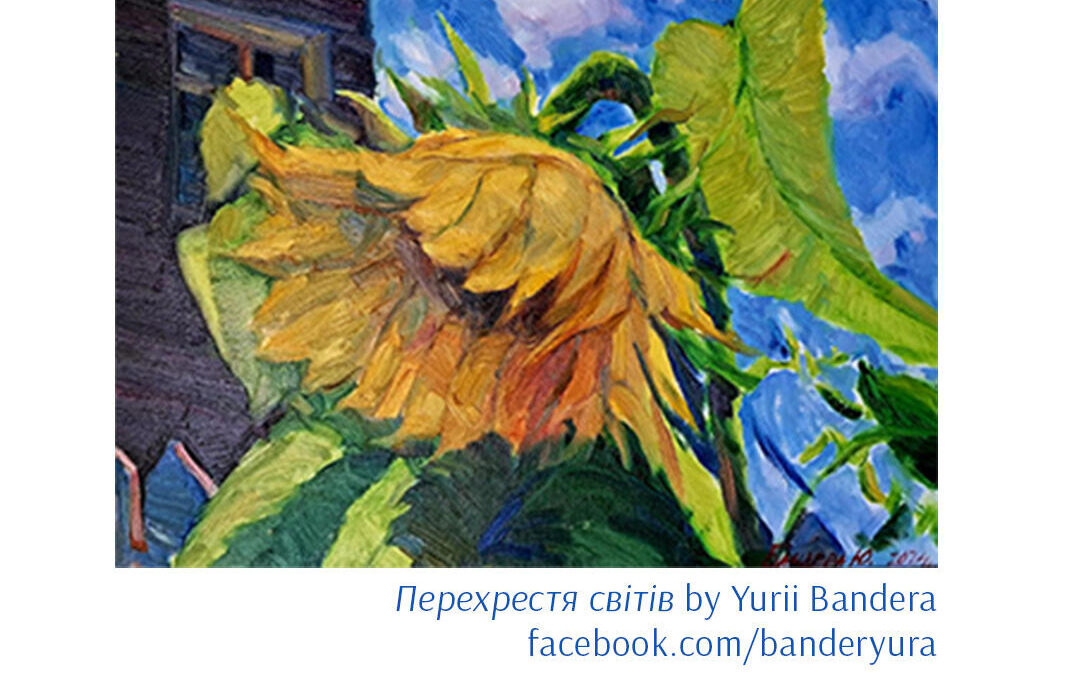
Yurii Bandera’s exhibition, “Crossroads of Worlds” (Перехрестя світів), will be on display May 30 to June 22 at the Ukrainian National Museum.
His work invites viewers into a space where multiple realities converge: cultures, memories, and inner and outer landscapes. Each work is born from the artist’s encounter with these dual realms, forming a visual dialogue between the seen and unseen. The “crossroads” becomes not just a motif but a philosophical meeting place—one where every viewer is invited to interpret the experience uniquely.
The artistic journey of Yurii Bandera began in childhood.
He graduated from Lviv Polytechnic University with a degree in Architecture. For over two decades, he taught at the Stryi Higher Art Vocational School, continuing to shape generations of young artists.
In 2017, Yurii Bandera’s contribution to Ukrainian art was officially recognized with his acceptance into the National Union of Artists of Ukraine. Now, in his new world — the United States — he continues to explore and expand his creative vision.
by Kseniia | Apr 1, 2025
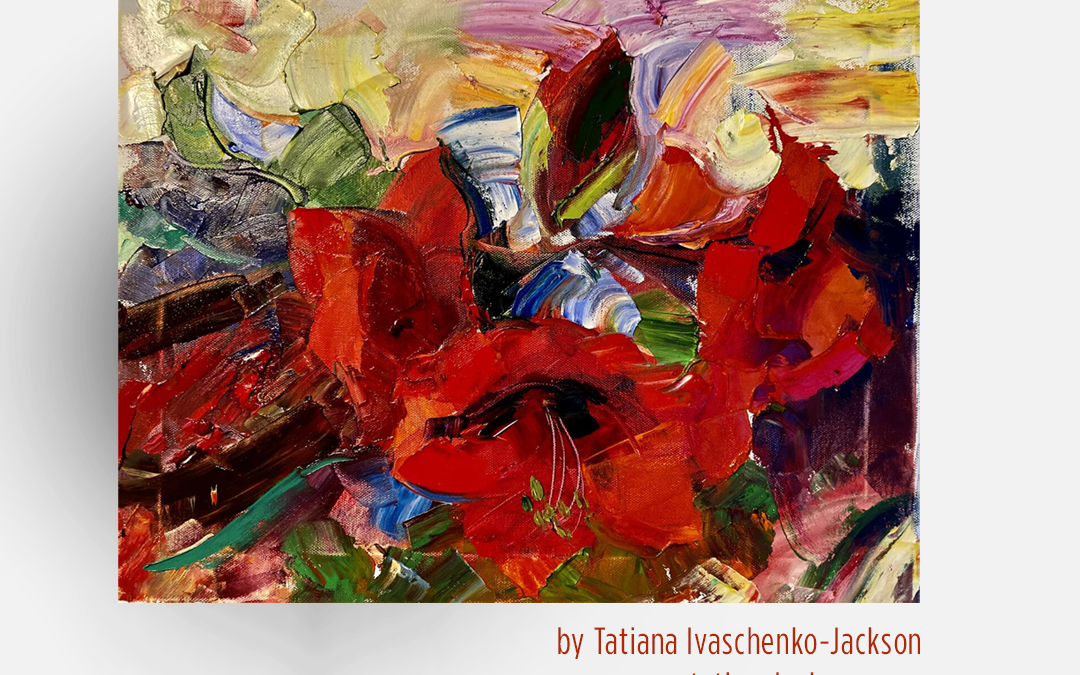
Tatiana Ivaschenko’s “Celebration of Life” exhibit celebrates the beauty of life, faith, and creation. Drawing from her personal journey, her vibrant paintings explore themes of growth and spiritual transformation. Through Impressionistic style and deep personal reflection, Ivaschenko invites viewers to appreciate the everyday beauty and divine joy found in life’s moments.
by Kseniia | Feb 17, 2025
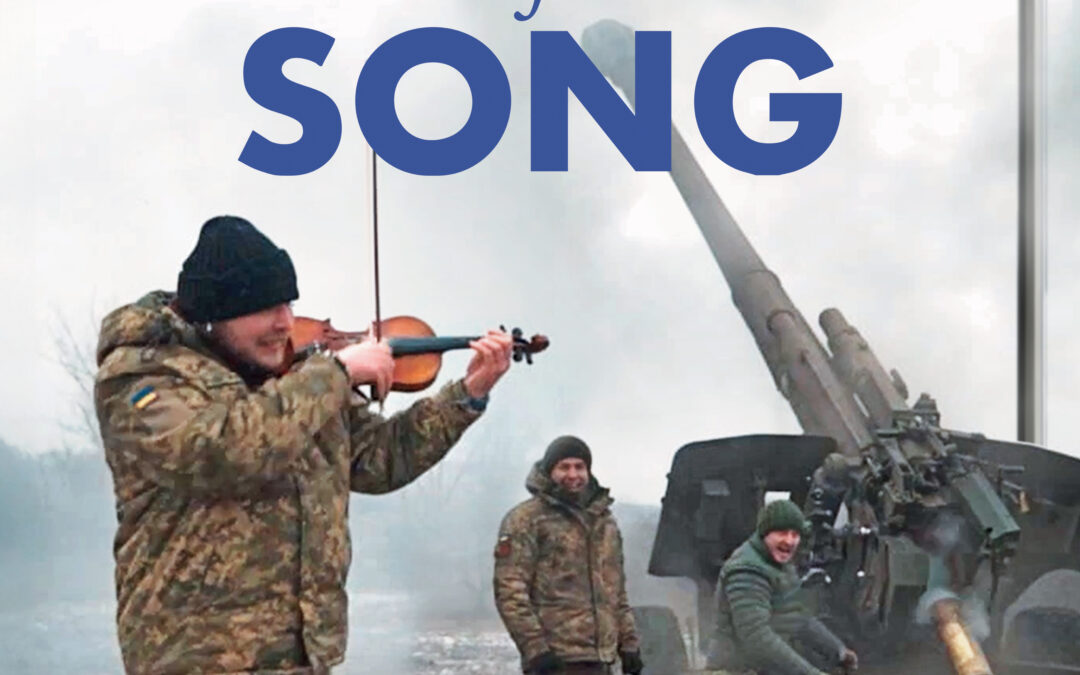
Chicago, IL – February 8, 2025 – The Ukrainian National Museum is honored to present a special screening of the acclaimed documentary “Soldiers of Song” on March 7, 2025, at 6:00 PM. Following the screening, attendees will have the unique opportunity to engage in a Q&A session with the film’s director, Ryan Smith.
“Soldiers of Song” delves into the profound impact of music on Ukrainian culture during times of conflict, highlighting the resilience and unity of the nation’s musicians. The film features intimate narratives from renowned artists such as Slava Vakarchuk (Okean Elzy), Andriy Khlyvnyuk (Boombox), and Svitlana Tarabarova, showcasing their experiences and the unifying power of music amidst adversity.
Director Ryan Smith, an Emmy Award-winning filmmaker known for “NFL 360: Who If Not Us”, brings an authentic and immersive perspective to this documentary. His collaboration with a courageous Ukrainian production crew offers viewers an unfiltered look into the challenges and triumphs faced by these musicians.
Event Details:
- Date: March 7, 2025
- Time: 6:00 PM
- Location: Ukrainian National Museum, 2249 W. Superior St., Chicago, IL 60612
- Admission: $20
Tickets can be purchased online here: https://ukrainiannationalmuseum.app.neoncrm.com/np/clients/ukrainiannationalmuseum/eventRegistration.jsp?event=98&
by Kseniia | Feb 3, 2025
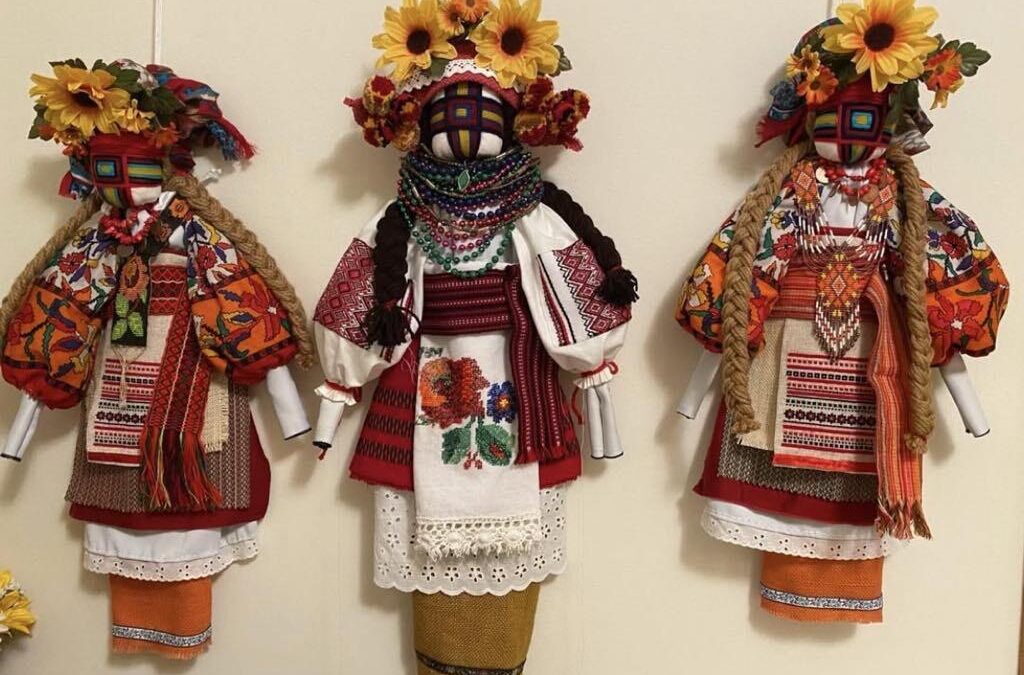
Join us for the Motanka workshop led by Olha Verbytska on February 22nd at 11 am.
All the materials are provided. The cost is $65.
Motankas (Мотанка) are ancient Ukrainian family talismans. They are the symbol of prosperity, goodness and hope. Then first knotted dolls appeared about 5,000 years ago, and represented the unity of the family and deep connection between multiple generations.
The name “motanka” comes from the word “motaty” (to wind) ie. to make a knotted doll out of fabric, without using a needle and scissors. Motanka served as a talisman of human destiny and our ancestors believed that destiny cannot be pierced or cut.
Generally, dolls were in the shape of a human figure, usually a woman or a child, and were made from pieces of fabric from old clothes of family members connected by knots.
Each doll was unique and made with only good intentions and sincerity as it was believed that it has the power and will to act as a protector of a household and it’s inhabitants.
by Kseniia | Feb 3, 2025
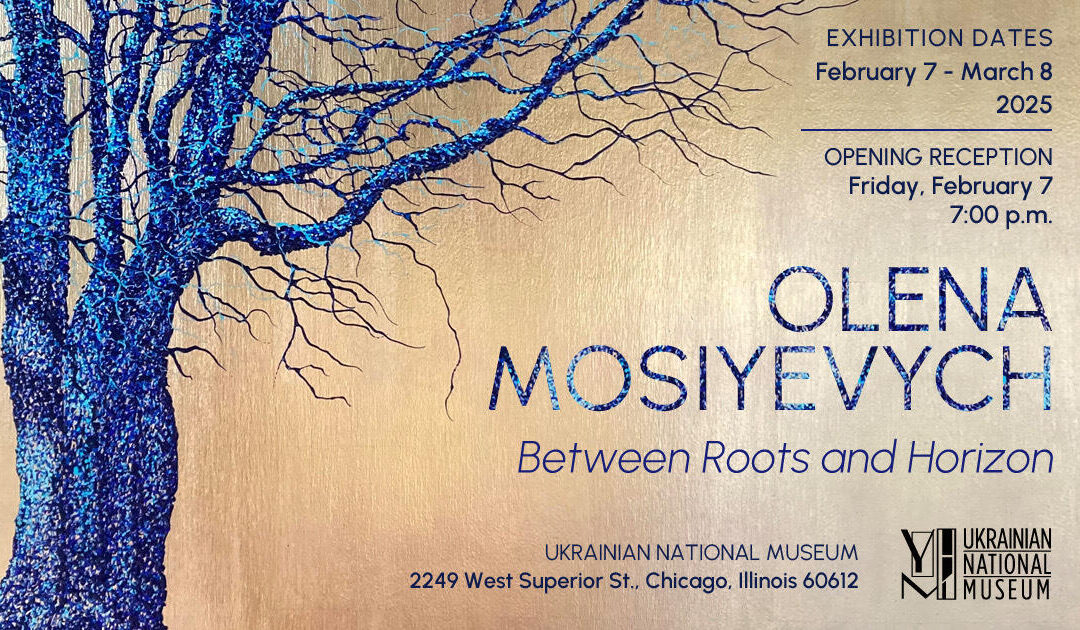
In Between Roots and Horizon, Mosiyevych explores the convergence of Ukrainian and American landscapes through cultural and ecological themes. She reflects on the environmental devastation wrought by war in Ukraine while drawing parallels to ecological challenges in the U.S. such as industrial agriculture and climate change. These parallel concerns serve as metaphors for the human experience of displacement and adaptation, capturing the fragile yet resilient connection between people and their environment.