by Marketing | Mar 23, 2026 | Blog
This past Saturday, the Chicago Cultural Alliance had the privilege of joining Core Member, the Haitian American Museum of Chicago (HAMOC), at their new permanent location at 4623 N. Clark Street. HAMOC purchased this new home in 2025 and has been working tirelessly since then to bring this new chapter of the organization to life.
The lead-up to the March 21st event has been incredibly busy for HAMOC, which provided four presentations on Jean Baptiste Point DuSable—a Haitian man and the first non-indigenous founder of Chicago—to students in grades 3 through 8, and hosted a Meet & Greet for various Black and African organizations across Illinois. Additionally, HAMOC’s PR Consultant, Nathalie, joined Mr. Emile Andre of Radio L’Union to discuss HAMOC’s upcoming events and Grand Reopening, while their Collections Team conducted a productive site visit to the Chinese American Museum of Chicago (CAMOC) to learn about their collection storage space. Furthermore, as part of the Alliance Française de Chicago’s Francophonie Month celebration, HAMOC participated in the annual Kick-Off event, where hundreds of community members enjoyed food from French-speaking countries, with the Haitian cuisine being a notable highlight.
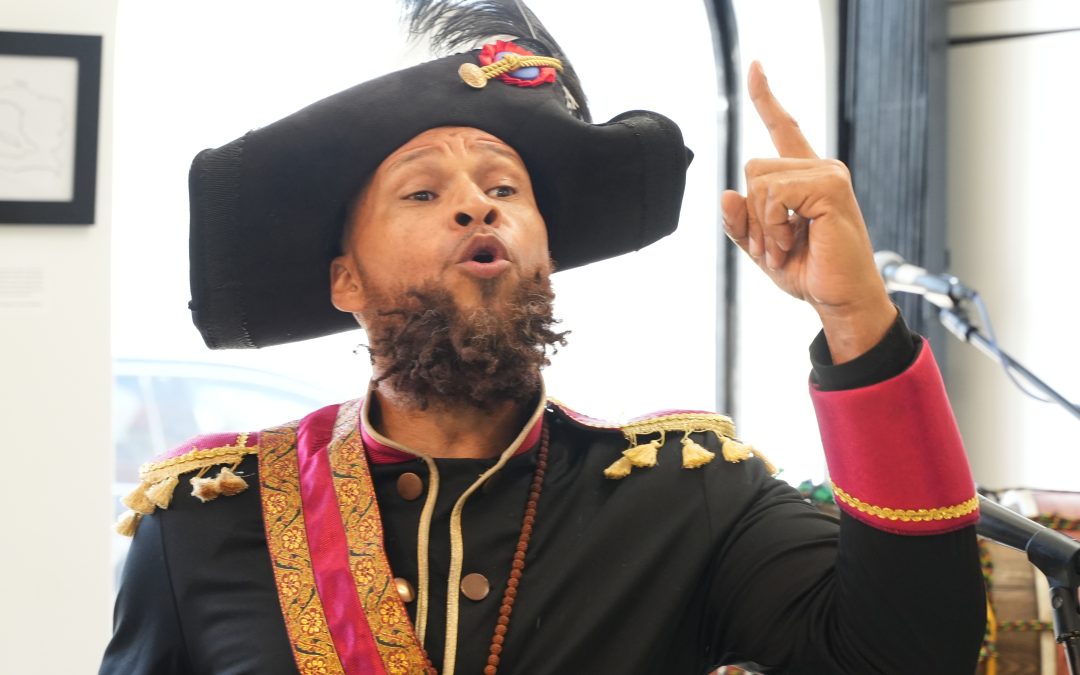
The Grand Reopening was a great success, filled with excitement as HAMOC’s Founder, Elsie Hector Hernandez, and Director of Programs and Museum Practice, Carlos Bossard, kicked off the proceedings. It was a wonderful day of music, art, food, and poetry. Many notable guests in attendance, including the Consulate General of Haiti, the Honorable Lionel Jean-Baptiste, and Alderwoman Angela Clay. Chicago Cultural Alliance Executive Director, Dr. Mónica Félix, was honored to be invited to give remarks as well. The Haitian American Museum of Chicago has been an active member of the CCA for over a decade. Dr. Félix highlighted the incredible accomplishments of this community-based museum in her remarks, citing the many ways in which they have shared authentic content from the Haitian and Haitian-American community through original exhibits, oral histories, and workshops over the years. Other highlights from the day’s celebrations included musical performances to energize guests and live painting from Haitian artists at the entrance to the grand opening
Founded in 2012, the Haitian American Museum of Chicago is the realization of founder Elsie Hernandez’s dream to create an institution that contributes to Chicago’s rich multicultural tapestry through diverse programs and exhibits.
Thank you to Elsie, Carlos, and the whole HAMOC team for letting us join you in this next phase of your organization.
You can view photos from the day on our social media @chicagocultural
Photography Credit: Nick Robins Photography, robinsfoto.com
by Marketing | Mar 20, 2026 | Blog
The Chicago Cultural Alliance (CCA) recently had the pleasure of joining the HANA Center for their Lunar New Year celebration, marking the Year of the Fire Horse.
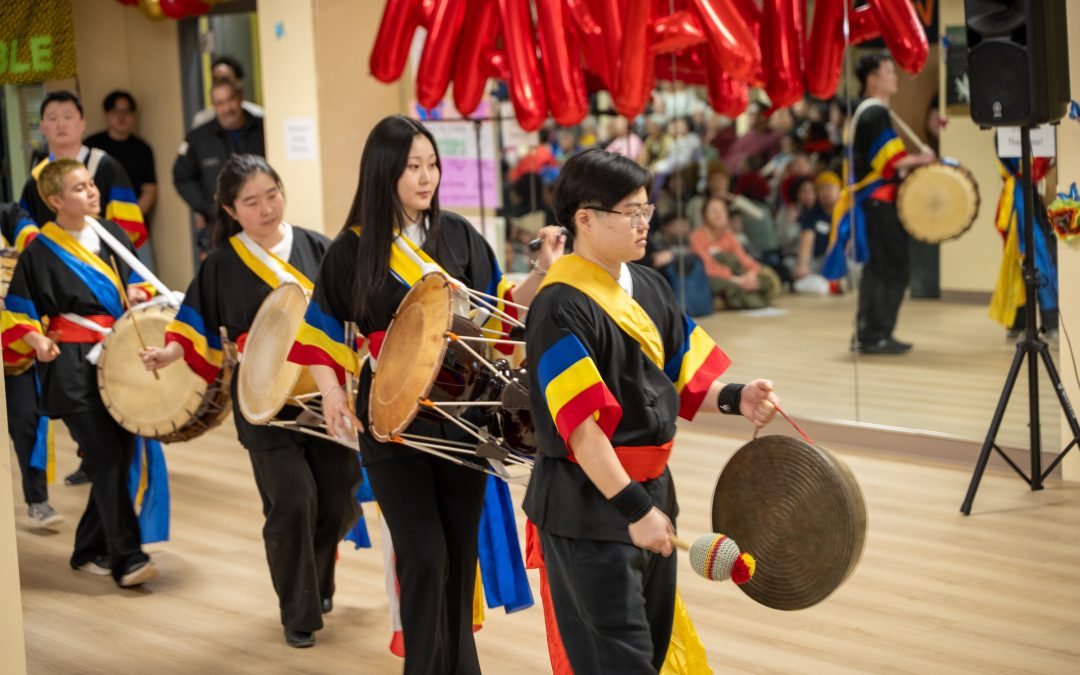
The event began with a vibrant pungmul performance—a traditional folk ritual of percussion, dancing, and singing. We were honored to hear powerful remarks from Joonseok Wee, Deputy Consul General of the Korean Consulate in Chicago, and Danae Kovac, Executive Director of the HANA Center. The Deputy Consul General spoke on how these celebrations foster mutual respect between generations and advance the interests of Korean, Asian, and immigrant communities. Danae Kovac called for a bold 2026, advocating for a world where low-income individuals and people of color can thrive.
The sense of intergenerational community and respect was unmissable during the saebae (세배), a traditional deep bow performed by the younger generation to their elders. During this Sebae, participants wear hanbok — colorful traditional attire — and exchange wishes for a healthy year. In return, elders provide youth with sebetdon (세뱃돈), or New Year money, in colored envelopes & pouches. The hanbok consists of a jeogori (jacket) and chima (skirt) for women, or a jeogori and baji (pants) for men. In Korean culture, hanbok is reserved for special occasions such as the Lunar New Year (alongside other holidays or weddings), and its flowing design represents harmony and grace.
Throughout the day, the CCA and HANA Center communities participated in a range of Lunar New Year activities, including drawing Fire Horses and crafting bokjumeoni (lucky pouches). Making the bokjumeoni was an 11-step process from folded paper, reminding us to think about warm wishes not just for ourselves, but for our family and community. Folding these pouches served as a reflection on the importance of community care and the value of our relationships. As we look toward the year ahead, the HANA Center asks: what wishes would you like to place inside your bokjumeoni?
Happy Lunar New Year and Year of the Fire Horse to all!
You can view photos from OPEN Center for the Arts on our social media @chicagocultural
by Marketing | Mar 17, 2026 | Blog
Visitors to OPEN Center for the Arts are greeted by a set of large, rustic wooden doors—one of the last pieces of original infrastructure repurposed after a fire in 2010. When the center reopened in 2014, the founding collective of artists originally intended to bring community-based art to other parts of the city. However, as Program and Outreach Manager Clara Byczkowski explains, that goal evolved when they realized it was more impactful for community members to see their own art within their neighborhood. Today, OPEN’s space reflects this vision and has grown into a vibrant community art center.
During a recent visit, Clara showed CCA several local pieces on the first floor, notably two floor-to-ceiling pieces – Alejandro Rosado’s
Out Enjoying Day and Juana Duran’s
Native. On the lower level, the walls are lined with sketches and memorabilia from the ongoing Wild Sculpture project, including images of the project’s excursions to the Lincoln Park Zoo.
Initiatives like the Wild Sculpture project make community public art a reality. Through this program, children from local schools can see their drawings transformed into metal sculptures displayed in parks and along sidewalks in Little Village. Clara, whose parents are immigrants from Brazil, reflects on how validating and inspiring it is for children and the community at large to see their creativity celebrated in their own neighborhood.
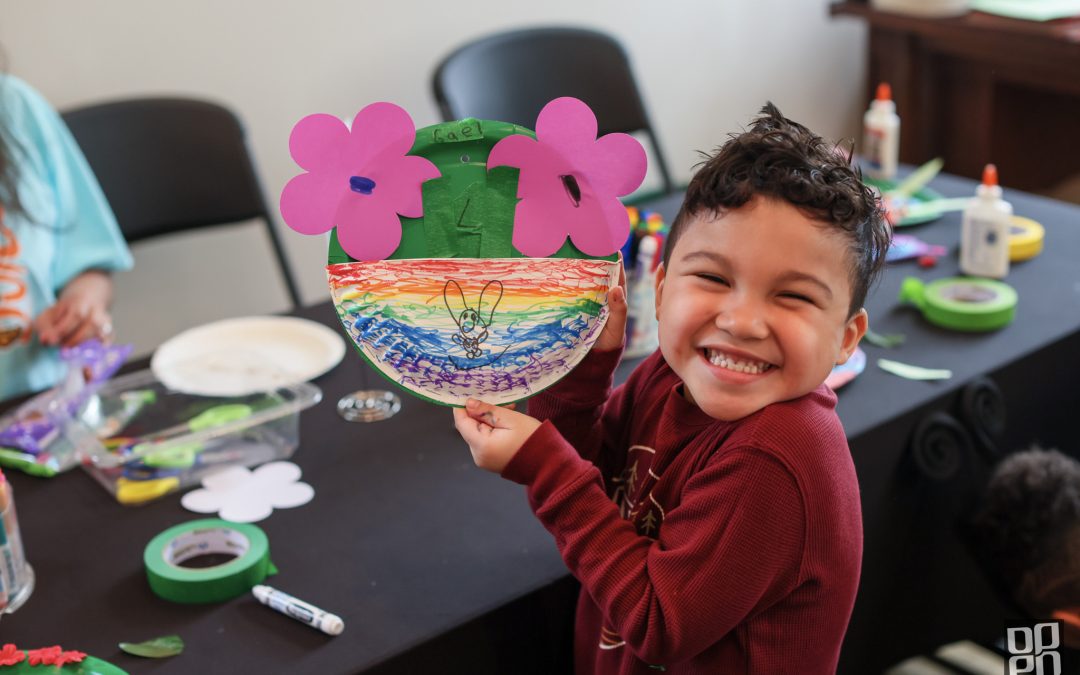
In the Wild Sculpture Project, drawings from local children in the North and South Lawndale communities are transformed into life-sized sculptures of animals and displayed in the Lincoln Park Zoo. The project unfolds in three phases: learning, drawing, and voting. Kids first learn about the endangered animal they will draw (past animals include polar bears and chimpanzees). Next is the drawing phase, where children create their own interpretation of the animal, imagining it freely and without the constraints of an adult perspective. In the final phase, community members, OPEN staff, and Lincoln Park Zoo animal specialists vote on which drawings will be transformed into metal sculptures.
The winning sculptures are unmissable when visiting the center. They are made by Omar Magaña, OPEN’s Executive Director, who brings the children’s designs to life through metalworking. The finished sculptures, installed as public art, allow local children to see their own creativity reflected in their community. Metal, Omar’s material of choice, carries its own symbolism. The strength of the material reflects the resilience of the community, a direct connection to perhaps the resilience of the building and the organization itself as well.
You can view photos from OPEN Center for the Arts on our social media @chicagocultural
by Marketing | Feb 18, 2026 | Blog
Stepping into the Trickster Cultural Center this past Saturday, I was immediately surrounded by the warm, woodsy smell of copal, an indigenous medicine of Mexico, burned in preparation for regalia and special ceremonies. The Center is preparing the space for a private wedding ceremony on Friday, and is filled with the chatter of community members, children, and extended family as they ready and design dresses for the big day.
Trickster began as a gallery promoting contemporary art of Native American veterans, but rebranded as a Cultural Center to emphasize the space’s focus on culture and healing, explains Gina, CCA’s guide and the Center’s Executive Director. On Saturdays, the Center hosts free Kinam classes, an Indigenous movement-based practice similar to yoga. Every Thursday is a cultural sharing night, offering teachings on Native culture and a casual community space. Members and artists oftentimes bring unfinished pieces of their artwork, from beadwork to sewing, utilizing the space to collaborate and share their respective work.
The first-floor exhibition is a place of teaching. Representing various tribal regions in the United States, it responds to the misconception that all Native American cultures are alike. The Na’wa’his’- Our Relations exhibit displays the art of George, Heather, and Halcyon Levi, of the Southern Cheyenne and Kiowa Tribes of Oklahoma. Their pieces use ledgers left behind from U.S. military massacres in the 1800s on the Great Plains, notably the Sand Creek Massacre of the Cheyenne and Arapaho people in 1864. Survivors of massacres began to write and create art out of these ledgers, and it is still used as a form of resistance today. Exhibits such as the Levi’s help dismantle stereotypes that Native Americans once inhabited the U.S, but have since left. Trickster provides the space, through art and community, for Native American culture and tradition to thrive and practice in contemporary North America today.
You can view photos from the visit on our social media @chicagocultural
by Marketing | Feb 13, 2026 | Blog
Last Saturday, the National Museum of Puerto Rican Arts and Culture welcomed the Chicago Cultural Alliance for their Dominoes and Mimosas event with La Familia Domino League! This was a women’s only event, and our Marketing Intern, Fiona, had a blast connecting with other members of the community over mimosas, cups of cafecito, charcuterie-style snacks, and many games of dominoes. La Familia Domino League, especially board member Angel Cebollero, were instrumental in our learning process. This was our first time playing, and it was surprisingly easy to pick up! Plus, we made some new friends along the way.
The day before Bad Bunny’s Super Bowl performance felt like the perfect occasion to visit the Museum. The Puerto Rican artist dominated the afternoon’s playlist, especially his most recent album DeBÍ TiRAR MáS FOToS (Fionas favorite song was “BAILE INoLVIDABLE”). The Museum gift shop (a must-see on your visit or for a quick gift of artisanal earrings) had limited museum edition “Benito Bowl” t-shirts for sale, which were also given away at the event as a raffle prize, along with a custom-made domino table!
Encircling the main event were collections of paintings, several celebrating the resilience of Puerto Rican womanhood. The painting Heirloom shows the long, manicured nails and rings of women playing dominoes, a pastime often associated with men. The ritual is reclaimed here as distinctly feminine, allowing space for women across Puerto Rican and Caribbean cultures to step out of the realm of domesticity and take on assertive and competitive roles. Such feminine power was definitely in the air last Saturday. We hope La Familia and the Museum come together again, as it was a truly memorable afternoon filled with impeccable music, community, and, of course, dominoes!
You can view photos from our visit on our Instagram – @chicagocultural