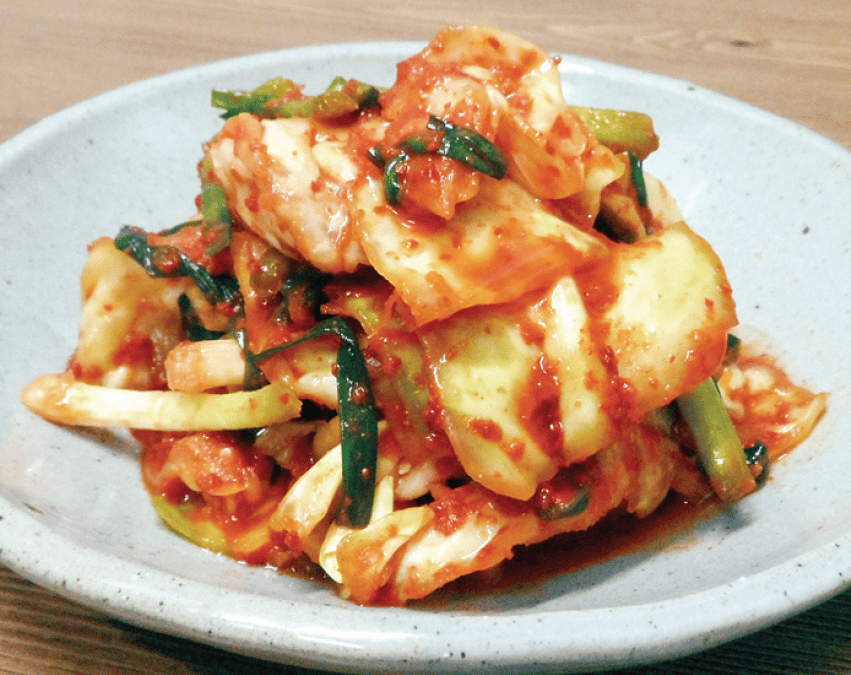
Cabbage Kimchi from the Korean Cultural Center of Chicago

Cabbage Kimchi from the Korean Cultural Center of Chicago

Dr. Yoon Tae Kim, Korean Cultural Center of Chicago


Taste from Home is a collection of recipes and stories can be used as a way to connect with others and facilitate conversations about race, culture, and identity over a new recipe. Make a cultural dish and sit down with family and friends and have a discussion of the culture it represents.  Please consider making a tax-deductible donation today, if you are able. If you are unable to donate, you can still participate by sharing a recipe by using hashtags #tastefromhome, #tastefromhomerecipe, & #chicagocultural on FacebookTwitter, or Instagram.


The mission of the Korean Cultural Center of Chicago (KCCoC) is to promote and organize Korean cultural, arts, educational, and social activities. KCCoC aims to establish a venue where all Korean Americans and other groups can participate in programs and events that celebrate Korean culture and heritage. KCCoC strongly encourages cross-cultural understanding that can embrace and empower all people to coexist peacefully.

“Kimchi has been a staple in the diet of Koreans for thousands of years. It is a great method of preserving vegetables throughout the season when the refrigerator was not available and also a great source of vitamins and other necessary dietary elements. Now it has become a well known and loved recipe internationally, because it has a special character of making someone becoming adhered and addicted once they have experienced its taste.

My wife and I, not being good at cooking, tried to make a Kimchi when we first got married in 1974. At that time, not many ingredients were available. But we had cabbage and hot peppers. Just remembering the scene when my mother and sister had made Kimchi years ago, we salted cabbage and put hot peppers and green onions in the bottle and left it there for a day. We did not know how it would turn out. In fact, we did not expect it to be good at all! But to our big surprise, when we tasted it, it truly was delicious. I still remember that triumphant moment.”
– Dr. Yoon Tae Kim

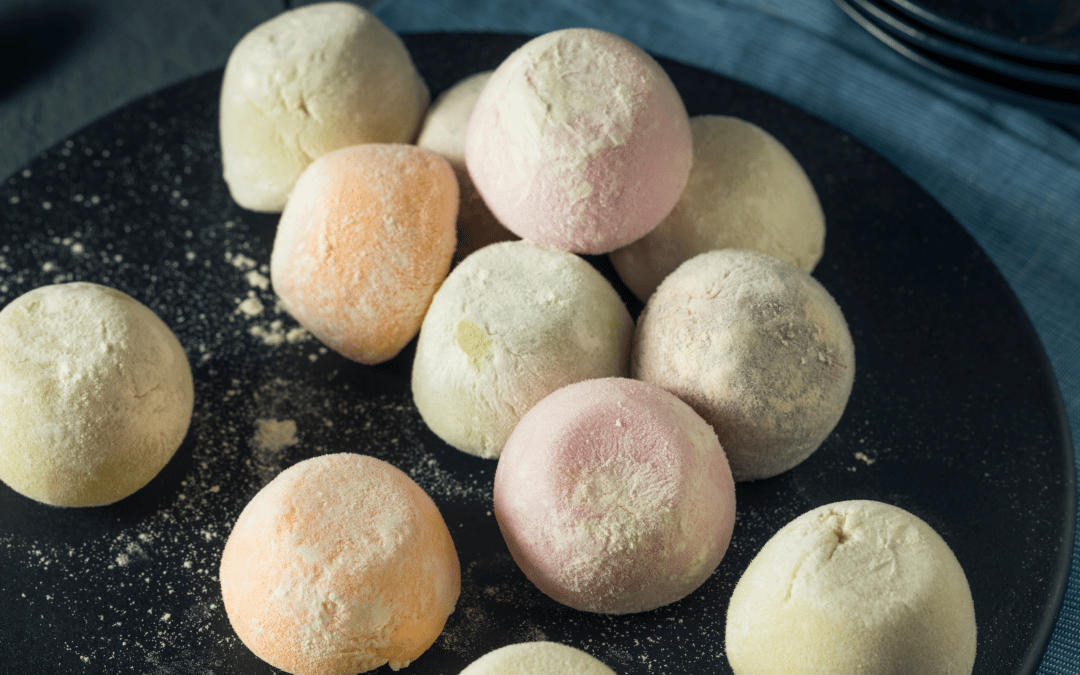
Diane’s Japanese Mochi

Diane’s Japanese Mochi

Diane Ohi, Human Resources Director, Chicago History Museum 


Taste from Home is a collection of recipes and stories can be used as a way to connect with others and facilitate conversations about race, culture, and identity over a new recipe. Make a cultural dish and sit down with family and friends and have a discussion of the culture it represents.  Please consider making a tax-deductible donation today, if you are able. If you are unable to donate, you can still participate by sharing a recipe by using hashtags #tastefromhome, #tastefromhomerecipe, & #chicagocultural on FacebookTwitter, or Instagram.

Beans and rice – a familiar world-wide staple, yes?  But what about beans and rice …for dessert? Here, I’m telling the story of my Japanese-American family’s love of desserts made from sweetened azuki beans and sweet rice.  Many of you may have heard of mochi, the smooth chewy rice dessert filled with ice cream at restaurants.   In its original form, that same mochi is filled with red azuki beans cooked in sugar.  Another variation takes the sweetened beans thinned into a soup and served hot in the winter, with toasted sweet rice “cakes” cooked in a dry skillet until chewy in the inside, and crispy on the outside.  A summer version, frequently served at festivals, is the same “soup” served over shaved ice – cool, sweet, and refreshing.

My kids and I love mochi in all its forms and due to their early childhood food allergies to milk and nuts, mochi became our go-to dessert.  Having avoided ice cream, cup cakes, cookies, and candy bars for years, I was thrilled to make a nut-free, dairy-free dessert with a connection to my cultural heritage – MOCHI! As a child, I recall going to the Japanese grocer with my mother and grandmother and seeing the trays of freshly made fancy mochi at the cash register.  Often in bright colors, the pink, green and white striped suama was my favorite, seconded by the pink mochi with the gelatin green leaf on the side.  They were all so beautiful and the counter was a perfect height to entice a young girl with a serious sweet tooth. In its most basic form, mochi is pounded sweet rice (a variety of rice) pounded until sticky and chewy and formed into flattened disks. They say the mochi is done when it is pounded so smooth that it feels like a baby’s earlobe!  Made especially to celebrate the New Year, this plain mochi is a must eat food to start the year off right.

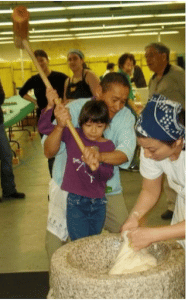
My family and I attended many New Year’s mochi-tsuki rice pounding celebrations at the Chicago JASC with the members of Tohkon Judo Academy, members of the JA community, and other welcome neighborhood guests.  My children even tried their hand at mochi “smooshing” using large mallets and hot rice in a giant stone bowl.  The actual pounding is somewhat dangerous and done by teams of four adults, who alternated their pounds like a drum quartet, all pounding their long wooden mallets into the same large stone bowl. Later, “the grandmas” (aka the professionals) allowed my children and me to form the mochi into rice cakes and even fill the plain cakes with a whole strawberry and sweetened red bean paste. These finished trays of mochi were then delivered to senior centers, restaurants, and shared with guests.

My mother and grandmother would serve toasted stove top mochi in a bowl with a little sugar and soy sauce for dipping. The mochi was crunchy and chewy, the sauce salty and sweet.  A truly wonderful and satisfying fall or winter snack.  We now make this at home but in a Belgian waffle maker and call it “Mah-fu-roos” (mochi waffles)! Today, my children no longer have their allergies, but still love to indulge in mochi desserts.  They have discovered my well-worn book of Hawaiian mochi recipes and are trying new dishes, like microwave butter mochi cake, mango mochi, and tri-colored baked coconut mochi for Girls Day. Like many traditions in America, we remember the old and add our new touches.  I am truly grateful for the opportunity to pass along  our mochi-love and pride in our cultural heritage.

Andrew’s Slovak Haluski (Grandma’s Recipe)

Andrew’s Slovak Haluski (Grandma’s Recipe)

Andrew Leith, Conservation and Collection Program Manager, Chicago Cultural Alliance

Taste from Home is collection of recipes and stories inspired by the food that defines who we are and where we come from. As we are all home exploring new recipes and cuisines, we encourage you to share a recipe and story with us that connects you to your family and cultural heritage.

Please consider making a tax-deductible donation today, if you are able. If you are unable to donate, you can still participate by sharing a recipe by using hashtags #tastefromhome, #tastefromhomerecipe, & #chicagocultural on Facebook, Twitter, or Instagram.


My name is Andrew Leith. I am the Conservation and Collections Program Manager at the Chicago Cultural Alliance. I have been at the Alliance since the beginning to 2017 but my relationship with this incredible organization dates back considerably further than that. You could say the Alliance and I came of age together over the past 16 years. When I was a young anthropologist in undergrad at Loyola University Chicago, I began volunteering as a facilitator for a recently minted program known as Cultural Connections through the Field Museum’s Center for Cultural Understanding and Change (CCUC).  It was through that formative experience with community collaboration that I came to visit several of the city’s treasured cultural centers and became friends with amazing community stakeholders such as Soo Lon Moy, Dorothie Shah, and the late Stanley Balzekas Jr. As it so happens, that program evolved into the Chicago Cultural Alliance.

I love my work. I am honored to be invited into the museum collections spaces our Core Members call home. It is a privilege to work hand in hand with these visionaries I now call friends to help to care for their collections.

Though it has many iterations, my Grandmother’s particular recipe for haluski derives from an old Slovak mountain dish comprised of potato dumplings and fried cabbage. My great-grandparents brought it with them from the village of Klenovec, Slovakia to the United States when they immigrated in 1912. Simple, hearty, and cost-effective, it fed five children on the family farm in northern Wisconsin during the Great Depression. I grew up loving Grandma’s haluski and spent many happy moments helping her to prepare it—consequently learning how to replicate the recipe myself. As with many old recipes, it is the product of experience, taste, touch, and smell rather than any proper written instructions. A dash of this and a scoop of that—this recipe is very forgiving and can be easily adjusted. Today, I continue to use my great-grandmother’s heirloom cutting board whenever I prepare haluksi, and the smell of frying cabbage evokes memories of my grandmother’s kitchen and her stories of a Slovak-American upbringing.  This is a tradition I look forward to share with my own son.

The recipe is in the link. A donation is not required to view the recipe. Any donations made will support the Chicago Cultural Alliance’s mission to promote, support, and connect museums and centers of cultural heritage for a more inclusive and equitable Chicago.

Vanessa’s Birthday Punch (Lola’s Recipe)

Vanessa’s Birthday Punch (Lola’s Recipe)

Vanessa Vergara, Board President, Chicago Cultural Alliance

Taste from Home is a collection of recipes and stories inspired by the food that defines who we are and where we come from. As we are all home exploring new recipes and cuisines, we encourage you to share a recipe and story with us that connects you to your family and cultural heritage.

Please consider making a tax-deductible donation today, if you are able. If you are unable to donate, you can still participate by sharing a recipe by using hashtags #tastefromhome, #tastefromhomerecipe, & #chicagocultural on Facebook, Twitter, or Instagram.


Why I serve as Board President of the Chicago Cultural Alliance:

I believe that cultural heritage matters and should be valued, shared, celebrated, and preserved.  If you do not know where you come from, you will never know where you are headed.  My cultural heritage is my personal compass.  My parents and grandparents emigrated from the Philippines so our family could pursue the American dream. 

I am proud to serve as the Board President of the Chicago Cultural Alliance because our work connecting, promoting, and supporting centers of heritage is so critical.  Being in the middle of a global pandemic reminds us all to get back to the basics.  What do we need to survive and thrive?  Working on this essay about my Lola’s punch transported me out of this pandemic and back into my childhood.  My childhood was greatly influenced by my heritage as a Filipino American raised in a family of recent immigrants.  I also learned something new about my own understanding of my personal history as you will soon learn! 

Who taught you this recipe & how did you learn it?         

I learned this recipe by watching my Lola (grandmother in Tagalog) and Mom make it ever since I was a kid.  I experienced this recipe by taste, enjoying many wonderful servings of Lola’s birthday punch. 

What culture/country is this dish from?

This recipe is a product of the Filipino-American culture.  My Lola invented it!

In the process of working on my Taste From Home essay, I learned that this punch is not actually a recipe from the Philippines as I had originally thought.  I found out from my Mom that my Lola had invented this recipe for me!  My Lola wanted to come up with something special for my first birthday and created this masterful birthday refreshment.  Her punch was such a hit that our punch bowl had to be refilled twice during my first birthday party.

When do you normally eat this dish? Is it for a holiday or a celebration?

You would typically serve this punch at a birthday party.  This recipe is also associated with any large family celebration, such as Christmas or New Year’s.  Anytime we have a large family gathering, you can guarantee, Lola’s punch will be served.

Why is it important to you?

This recipe is important to me because it symbolizes joy, family, and love.  It will forever be the iconic taste of my childhood.  It transports me back to simpler times when the world seemed less complicated and more innocent.

Growing up in a large, boisterous Filipino American family, some of my fondest childhood memories revolved around birthday celebrations.  Now I find myself at a time when my family and I cannot gather for large celebrations (or any celebrations for that matter).  Instead, we are setting up hazy, family Zoom calls and FaceTime sessions which are a poor substitute for being together, in person, with those you love. 

I now realize how easily I took for granted the memories of being able to gather for large family celebrations around a huge bowl of Lola’s heavenly punch.  Those memories are my plane ticket out of this pandemic.  That is why heritage and personal history matters. Memory is a transformative gift that can take you anywhere, anytime.

Even during a global health crisis, you can leave it all behind, even if for just a short time, and learn something new about yourself and carry those memories with pride and share them with others.  I encourage you to take a journey, without hesitation, and find your own plane ticket out of the pandemic to a destination in your personal heritage and share it with others with joy and pride!