National Indo-American Museum’s Mint Chutney

National Indo-American Museum’s Mint Chutney

National Indo-American Museum 


Taste from Home is a collection of recipes and stories can be used as a way to connect with others and facilitate conversations about race, culture, and identity over a new recipe. Make a cultural dish and sit down with family and friends and have a discussion of the culture it represents.  Please consider making a tax-deductible donation today, if you are able. If you are unable to donate, you can still participate by sharing a recipe by using hashtags #tastefromhome, #tastefromhomerecipe, & #chicagocultural on FacebookTwitter, or Instagram.


“The National Indo-American Museum builds bridges across generations and connects cultures through the diverse, colorful stories of all Indian Americans. Their highly successful Taste of India program provides an insider’s tour of Devon Avenue’s ethnic marketplace. These recipes come from one of their partner restaurants: ROOH Chicago “

 
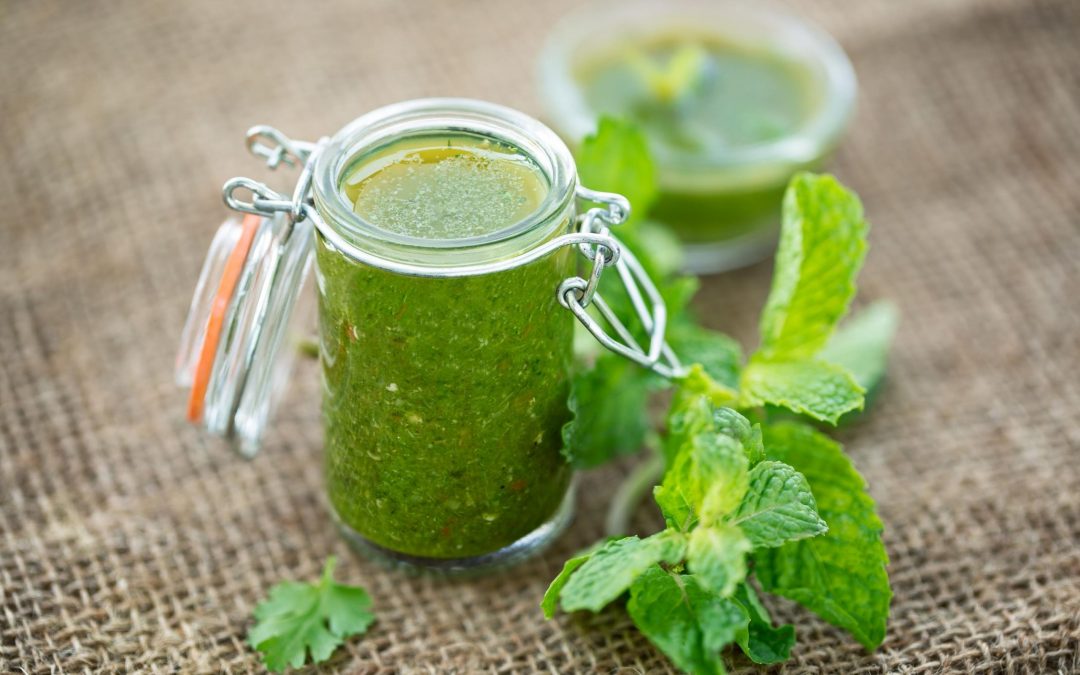
Mint Chutney

Ingredients

Blend Together
• Mint Leaves 1/4cup
• Cilantro Leaves 1 cup
• Garlic Peeled 2 tsp
• Ginger Peeled 5 tsp

• Green Chili 1 seedless
• Lemon Juice- 1 3/4 tsp
• Ice Cubes 2 to 3 ice cubes

Add in Post Blending
• Yogurt 1/2 cup
• Salt 3/4 tsp
• Roasted Cumin Powde 1/2 tsp

• Chat Masala- 1 tsp
• Sugar- 1 tsp
• Black Salt 1/2 tsp

Method
• Wash and pat dry mint and cilantro.
• In a blender add in all the ingredients to be blended together.
• Blend till a fine puree, pour it in a mixing bowl.
• Add in rest of the ingredients and taste for seasoning.
Linda’s Oxtail Soup

Linda’s Oxtail Soup

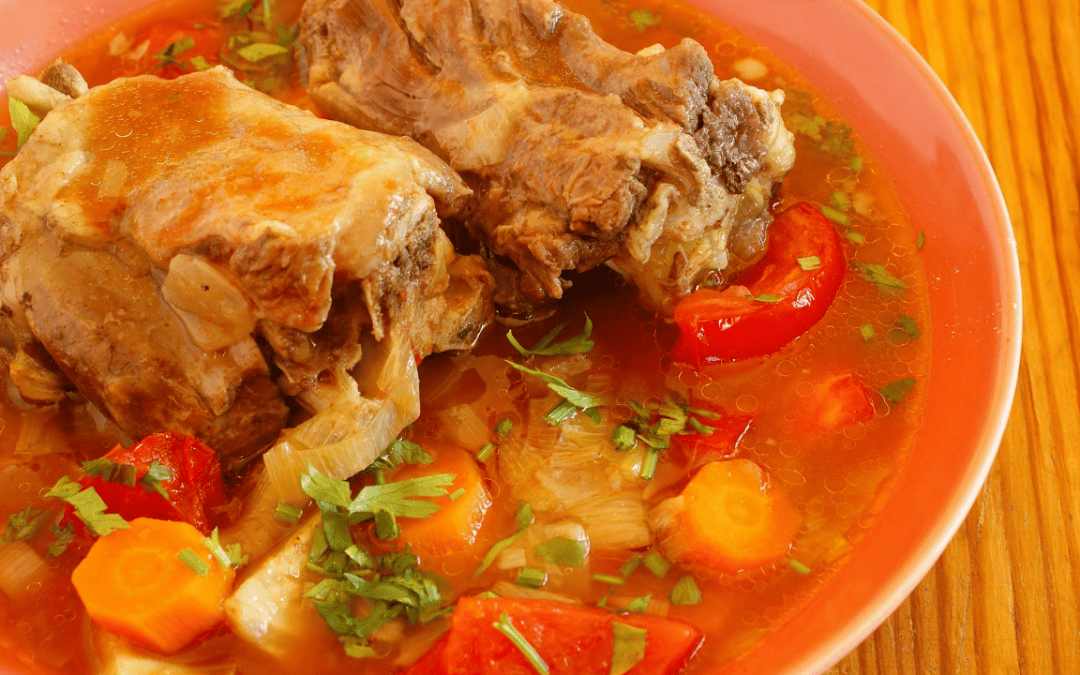
Linda’s Oxtail SOup, Supporter of the Chicago Cultural Alliance


Taste from Home is a collection of recipes and stories can be used as a way to connect with others and facilitate conversations about race, culture, and identity over a new recipe. Make a cultural dish and sit down with family and friends and have a discussion of the culture it represents.  Please consider making a tax-deductible donation today, if you are able. If you are unable to donate, you can still participate by sharing a recipe by using hashtags #tastefromhome, #tastefromhomerecipe, & #chicagocultural on FacebookTwitter, or Instagram.

“This is a food that I grew up with on the family farm in Rosedale, IN. My Mom would start it cooking on the stove in the morning and it would cook all day. The smell slowly filling the whole house until it was time to eat it. It smelled so delicious.”

Measurements are approximate

2 lbs oxtail bones

3 quarts water

1 onion, chopped

4 to 6 stalks celery, chopped

 Put in large pot, with a sprinkle of both salt and pepper.  Cover.  Cook over low heat ( should only lightly simmer) on stove for 4 to 6 hours, until meat is very tender and easily removed from the bones.  Remove meat to a separate container and cool slightly, until it can be handled.  Remove the bits of meat from the bones and return to the pot.  Discard bones, fat and gristle.  At this point this can be frozen for later, or chilled over night and the fat skimmed off.  When ready to use, reheat slowly until boiling. 

Add:

1 1/2 cups diced potatoes

1 1/2 cups diced carrots

2 cups tomato juice

Return to boiling.  Add:

1/2 cup frozen peas

1/2 cup frozen corn

1/2 cup diced turnip or

 1 cup chopped cabbage

1 to 2 cups dried wide egg noodles (optional)

Return to boiling and cook until noodles are cooked, about 10 minutes.  Serve hot.

Mai’s Mutabal Kousa Dip

Mai’s Mutabal Kousa Dip

Mai Kakish, Food Blogger for almondandfig.com


Taste from Home is a collection of recipes and stories can be used as a way to connect with others and facilitate conversations about race, culture, and identity over a new recipe. Make a cultural dish and sit down with family and friends and have a discussion of the culture it represents.  Please consider making a tax-deductible donation today, if you are able. If you are unable to donate, you can still participate by sharing a recipe by using hashtags #tastefromhome, #tastefromhomerecipe, & #chicagocultural on FacebookTwitter, or Instagram.


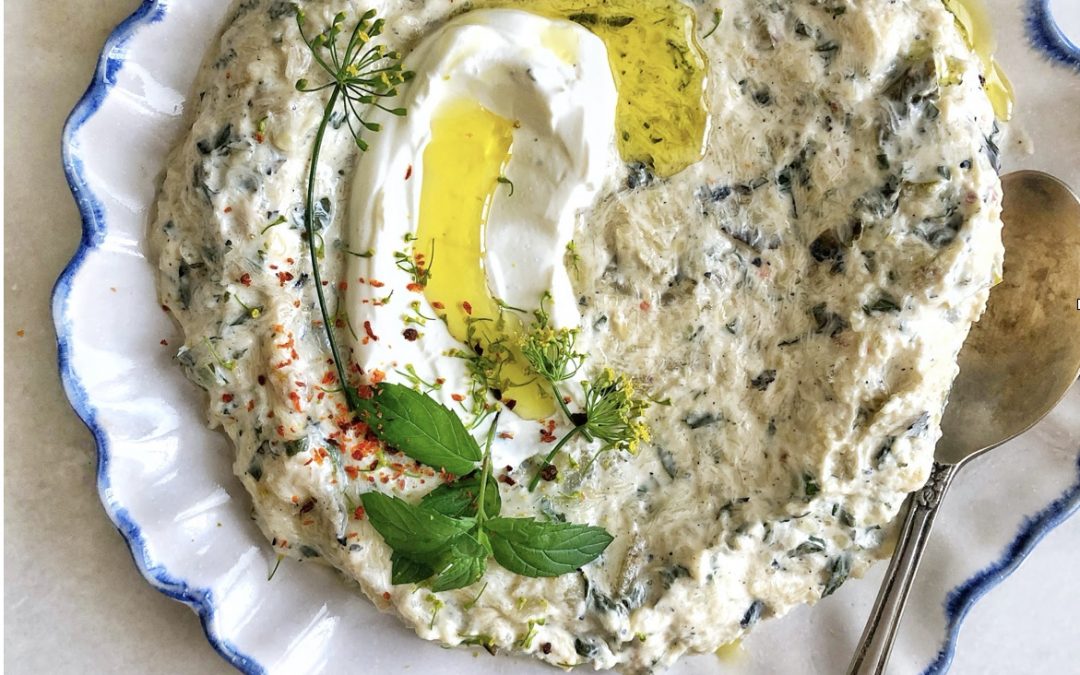
Mutabal Kousa:

A Summer cooling salad with fire-charred zucchini, mint, and yogurt from my grandmother’s kitchen

A recipe by Mai @almondandfig

www.almondandfig.com

Since my trip to go home to Palestine to visit my family was canceled this summer. I found myself cooking dishes that evoke my senses. These summer dishes are an account of memories that dance through my childhood and the summers spent with my family in Palestine. The fresh herbs my mother’s plants, the seasonal vegetables, and the tree-ripened fruit in my grandparent’s garden. The rhythmic beat of teta’s (grandmother) mortar and pestle pounding this mutabal. These are the type of things that evoke more than just memories, they excite my imagination and fill my senses with possibilities. So this summer when Palestine seems in the far distance you will find me cooking from home, the summer dishes that my grandmothers and mother make.

Summer lunch at my grandmother’s house was often filled with dishes like this one. Teta always cooked with whatever is in season.  She would be happy eating a bowl of this mutabal with charred crispy bread (that’s how she likes it), olives and sliced tomatoes.

Mutabal in Arabic means “seasoned.” It often refers to these delicious creamy salads or sides that are often mixed with tahini, yogurt or the combination of both.  My teta’s cooling mutabal with charred kousa, creamy yogurt and mint is perfect in the summer with grilled meats, part of a mezze plate, served with pita bread and other crisp veggies.

Ruben’s Filipino Pancit

Ruben’s Filipino Pancit

Ruben Salazar, Executive Director Filipino American Historical Society of Chicago


Taste from Home is a collection of recipes and stories can be used as a way to connect with others and facilitate conversations about race, culture, and identity over a new recipe. Make a cultural dish and sit down with family and friends and have a discussion of the culture it represents.  Please consider making a tax-deductible donation today, if you are able. If you are unable to donate, you can still participate by sharing a recipe by using hashtags #tastefromhome, #tastefromhomerecipe, & #chicagocultural on FacebookTwitter, or Instagram.


The Filipino American Historical Society of Chicago(FAHSC) is a cultural institution whose mission is to collect, record and preserve artifacts and documents of history of the Filipino Americans of metropolitan Chicago; and to educate about Filipino American history and Philippine heritage.

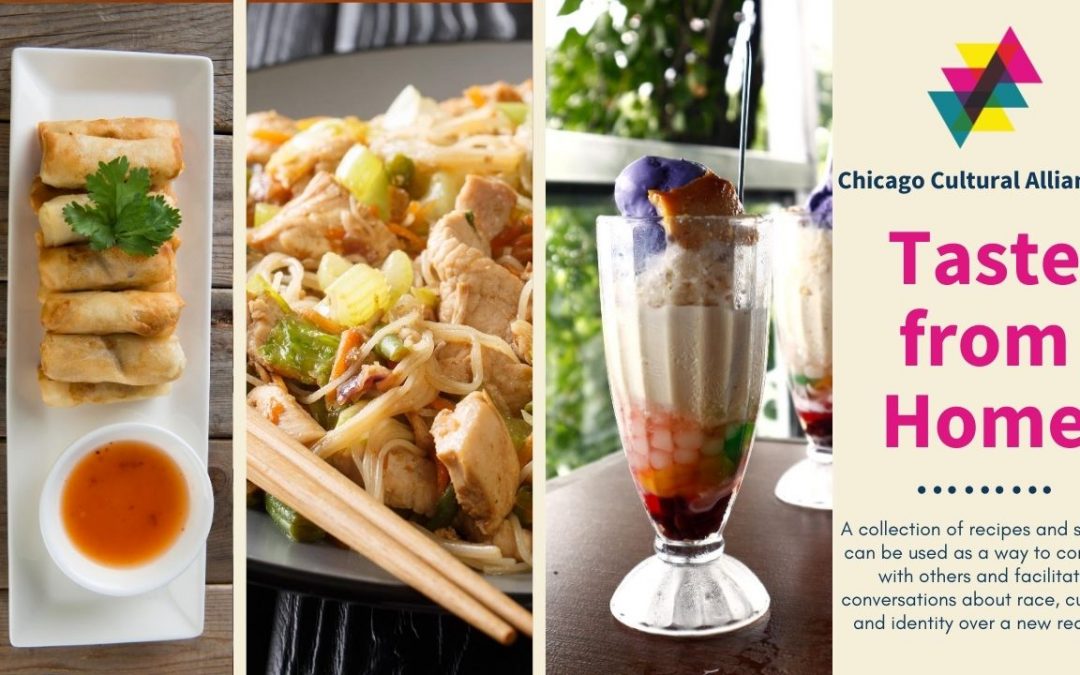
These dishes are from the PhilippinesI selected 3 of the most popular dishes that complete a typical combination for lunch or dinner – lumpia appetizer, pansit as the main entrée and halo-halo for dessert.

During the pandemic, I learned to prepare and cook these favorite dishes following the instructions that were shared with us by the chefs from restaurants that are partners of FAHSC and sponsors of Piyesta Pinoy. In support of social distancing measures, the annual outdoor festival had to be canceled. In its place, we hosted an online event that featured the cooking demos which are explained below.

I am happy to share the cooking demos of the Filipino food with you below. I am not a cook but I tried my best to follow the instructions and learned new skills. The food turned out to be delicious. If I was able to do it, I’m sure that you can do it too. Enjoy

Let’s start with the appetizer: Lumpia!

“Lumpia” is the Filipino version of the egg rolls. This recipe is courtesy of Chef Kathy Vega Hardy, owner of the A Taste of the Philippines, started as a food truck from Denver Colorado, moved to Chicago serving food at various farmer’s market and soon to open its own food stall at the French Market in downtown Chicago.

“Lumpia” can be served as a side dish or as an appetizer. It can be vegetarian made with locally grown vegetables or prepared with vegetables and meat, usually ground pork or chicken.

Next is the main dish: Pansit!

Traditionally, Pancit is a Filipino dish that is a must-have for Birthday Celebrations as it represents long life. This recipe is courtesy of Chef Garnett from the Mora Asian Kitchen. Pansit is a traditional Filipino dish that is always requested always present in every Filipino occasions such as fiestas, picnics, pot-luck parties, and every holiday celebrations. It is a must-have dish for Birthday Celebrations as it represents long life. It is also always served in after mass receptions during the 9-day Simbang Gabi religious tradition.

And finally….dessert: Halo Halo!

Halo-halo (Tagalog for “mix-mix”) is a popular Filipino cold dessert which is a concoction of crushed ice, evaporated milk and various ingredients including, among others, ube, sweetened beans, coconut strips, sago, gulaman (seaweed gelatin), pinipig rice, boiled root crops in cubes, fruit slices, flan, and topped with a scoop of ice cream. This recipe is courtesy of Chef Matthew Alfaro and Sous Alexa Alfaro, co-founders of  @Meat on the Street, A Filipino food stall and food truck in downtown Milwaukee, WI. Food truck services Madison to IL. Filipino food being served parallels what you have at a Filipino party or in a lola’s (grandma’s) kitchen.

“Halo-halo” can be served as a dessert item after the main entree for lunch or dinner or as a refreshing cold drink anytime of the day very popular during the hot summer days.  It can be made with locally grown fruits or prepared with canned or bottled fruits prepared and preserved with sweeteners.

Alaka’s Saffron Cheesecake

Alaka’s Saffron Cheesecake

Alaka Wali, Founder of the Chicago Cultural Alliance


Taste from Home is a collection of recipes and stories can be used as a way to connect with others and facilitate conversations about race, culture, and identity over a new recipe. Make a cultural dish and sit down with family and friends and have a discussion of the culture it represents.  Please consider making a tax-deductible donation today, if you are able. If you are unable to donate, you can still participate by sharing a recipe by using hashtags #tastefromhome, #tastefromhomerecipe, & #chicagocultural on FacebookTwitter, or Instagram.

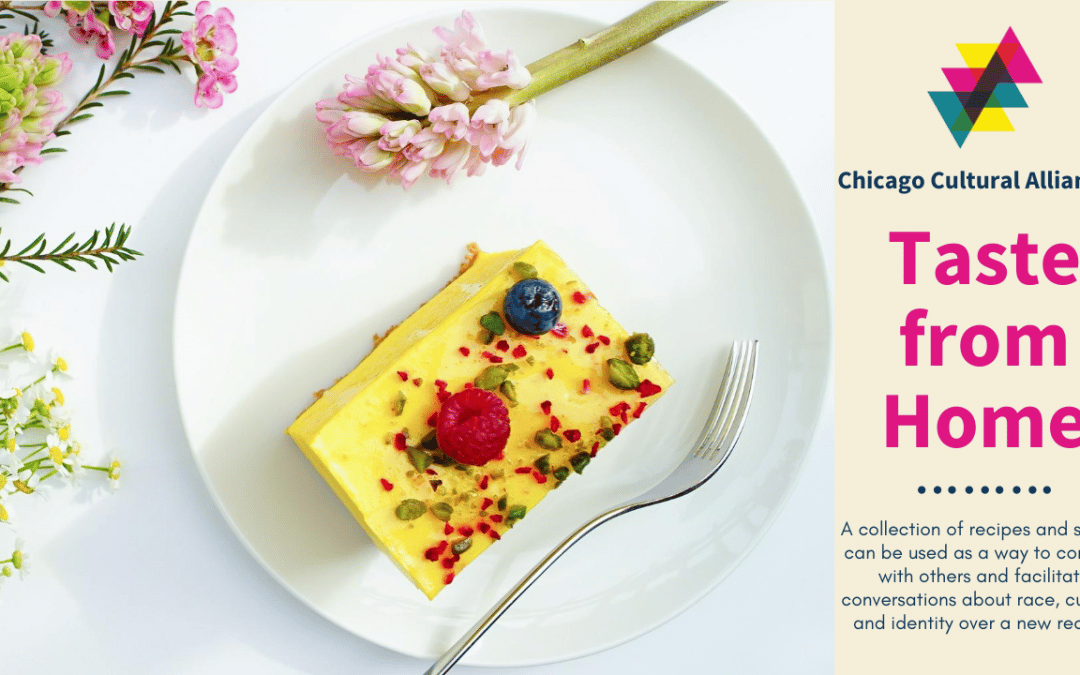
This recipe was invented by Kashi Wali, my Mother, soon after she came from India to the United States.  She and her husband loved to entertain friends and colleagues, and it occurred to her that putting a new twist on a standard American desert would please her guests.  She used the Joy of Cooking recipe for “cheesecake cockaigne”  and added an “Indian” flavor to it by using two very special spices—cardamom and saffron.  Both of these spices are used in India for very special sweet dishes,  such as Shrikand,  a creamy sweet yoghurt desert. When I was in college and lived in a coop, I made the cheesecake for my dorm mates, and they gave it an award! Ever since, whenever I entertain guests and want to do something special, I make this cheesecake.  Now, I share this recipe with my children and with all of you!

Video made by Monona Wali.

Zainab Khan’s Persian Khoresh

Zainab Khan’s Persian Khoresh

Zainab Khan, Co-Founder and Executive Director, Muslim American Leadership Alliance


Taste from Home is a collection of recipes and stories can be used as a way to connect with others and facilitate conversations about race, culture, and identity over a new recipe. Make a cultural dish and sit down with family and friends and have a discussion of the culture it represents.  Please consider making a tax-deductible donation today, if you are able. If you are unable to donate, you can still participate by sharing a recipe by using hashtags #tastefromhome, #tastefromhomerecipe, & #chicagocultural on FacebookTwitter, or Instagram.


MALA (Muslim American Leadership Alliance)is an arts and culture organization committed to amplifying and celebrating the voices and perspectives of American Muslims through the art of oral history and digital storytelling. MALA works to build vibrant and dynamic communities and inclusive spaces for cultural exchange and community dialogue. This family recipe is provided by Zainab Khan, MALA’s Co-founder and Executive Director.

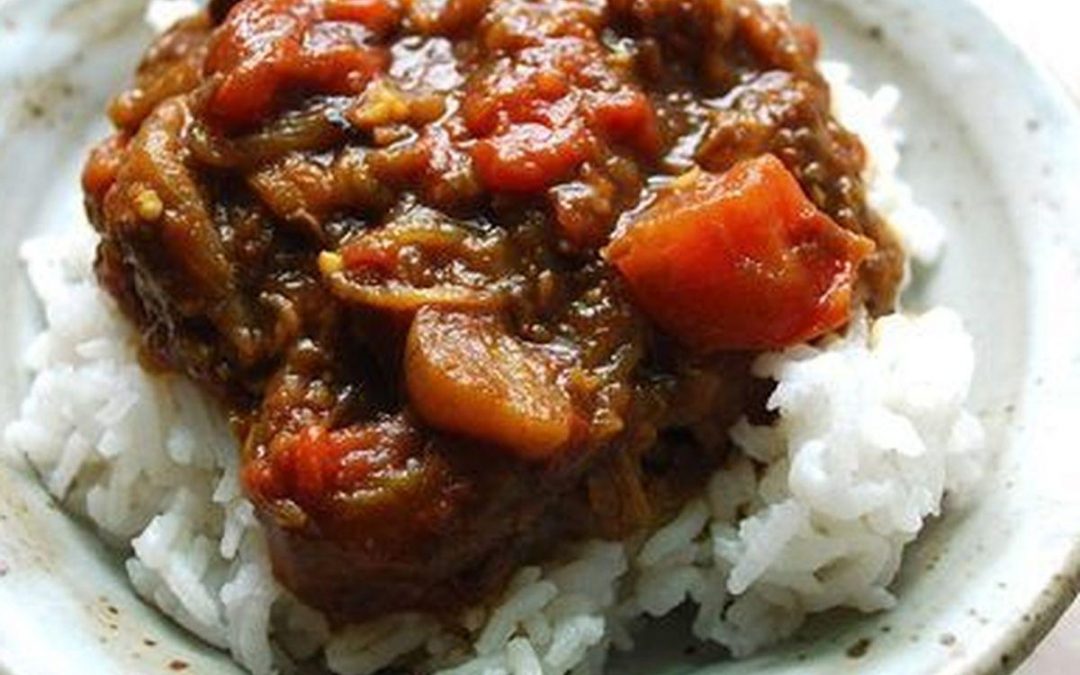
Khoresh, (sometimes spelled khoresht) or stew, is a mainstay of Persian cuisine. While khoresh bademjan, or eggplant stew, often includes meat, it’s a recipe well suited to vegetarian adaptations. This vegan version makes a delicious main dish served over plain steamed rice or crusty tahdig (crispy persian rice). For a less traditional take, serve it over quinoa or couscous. If you’re not concerned about keeping things vegan, a dollop of yogurt herb sauce is a tasty topper to this meal.

I love this dish because its ingredients are so universal, and it can take on so many different flavors.  When I was a child growing up outside of Chicago, my father used to make Khoresh Bademjan for us.  Today, I make the same dish for my son and although my recipe is slightly different, it still feels like I’m carrying on a tradition.  In many ways, I love this dish for its practicality: it’s inexpensive to make, it has a very flexible flavor profile, and it’s really nutritious as well.  My two-year-old even loves it!  Khoresh Bademjan will forever be special food for me, both for its personal value and for its cross-cultural value as well.

Kladdkaka (Swedish sticky chocolate cake)

Kladdkaka (Swedish sticky chocolate cake)

Recipes from The Swedish American Museum


Taste from Home is a collection of recipes and stories can be used as a way to connect with others and facilitate conversations about race, culture, and identity over a new recipe. Make a cultural dish and sit down with family and friends and have a discussion of the culture it represents.  Please consider making a tax-deductible donation today, if you are able. If you are unable to donate, you can still participate by sharing a recipe by using hashtags #tastefromhome, #tastefromhomerecipe, & #chicagocultural on FacebookTwitter, or Instagram.


The Swedish American Museum has been active for over 40 years in the heart of Andersonville, a traditionally Swedish area on the north side of Chicago. Andersonville, the “Little Sweden” of Chicago, is one of the most concentrated areas of Swedish heritage in the United States, with Swedish roots dating back to the 19th century. Tourists visit the area continually to sample Swedish food, buy gifts, visit the Museum, and partake in traditional Swedish holidays such as Midsommar and Julmiddag.

Through its arts and educational programs and its permanent collection, the Swedish American Museum interprets the immigrant experience for children and adults and promotes an appreciation of contemporary Swedish-American culture.

Probably the two most common recipes of those are the chocolate balls (Chokladbollar) and the sticky chocolate cake (Kladdkaka). Because they are both super easy to make they are staples in the Swedish household, much like chocolate chip cookies and brownies here in the US.

Chocolate balls or Chokladbollar is probably the first thing that every Swedish child learns to “bake”. Since it requires no baking time and using of hands is required, most children (and parents) love this recipe. In this video, Cyrus and Angelina will teach you how to make these simple, yet delicious treats. Angelina and Cyrus were born in the U.S. to Swedish/Iranian/British parents and all three cultures are celebrated in the home

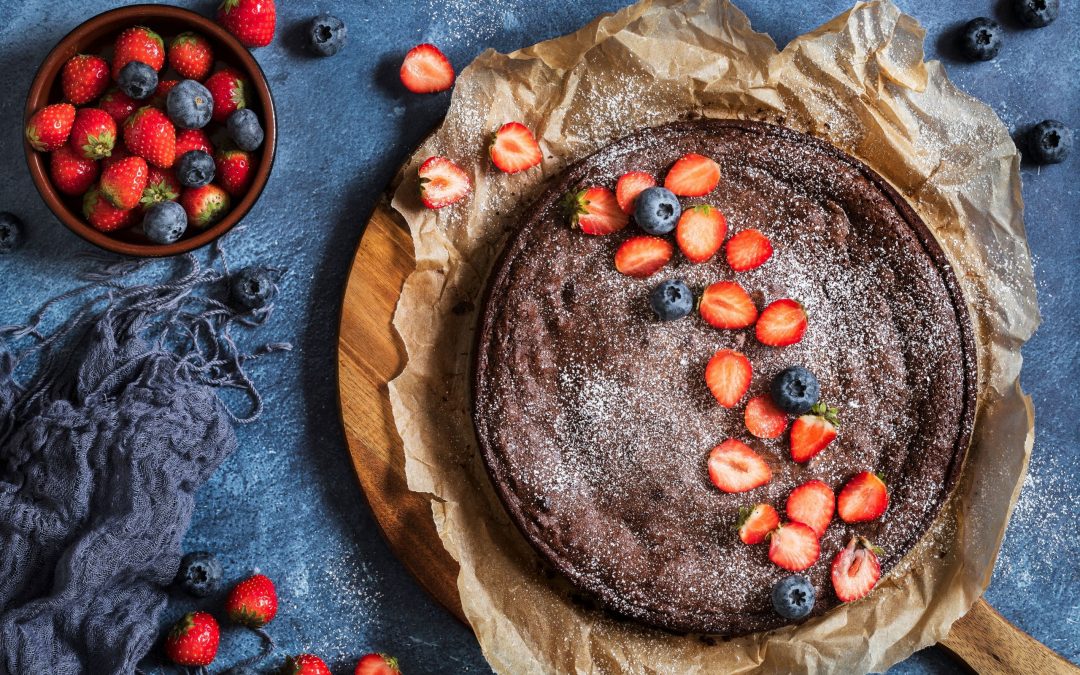
Swedish Sticky Chocolate Cake or Kladdkaka can be compared to a brownie, but there is one important difference. The kladdkaka does not use a raising agent and is therefore more dense and as you can tell by the name, it is still sticky. People vary the stickiness depending on taste. It is usually served in wedges with a dollop of fresh whipped cream on top.

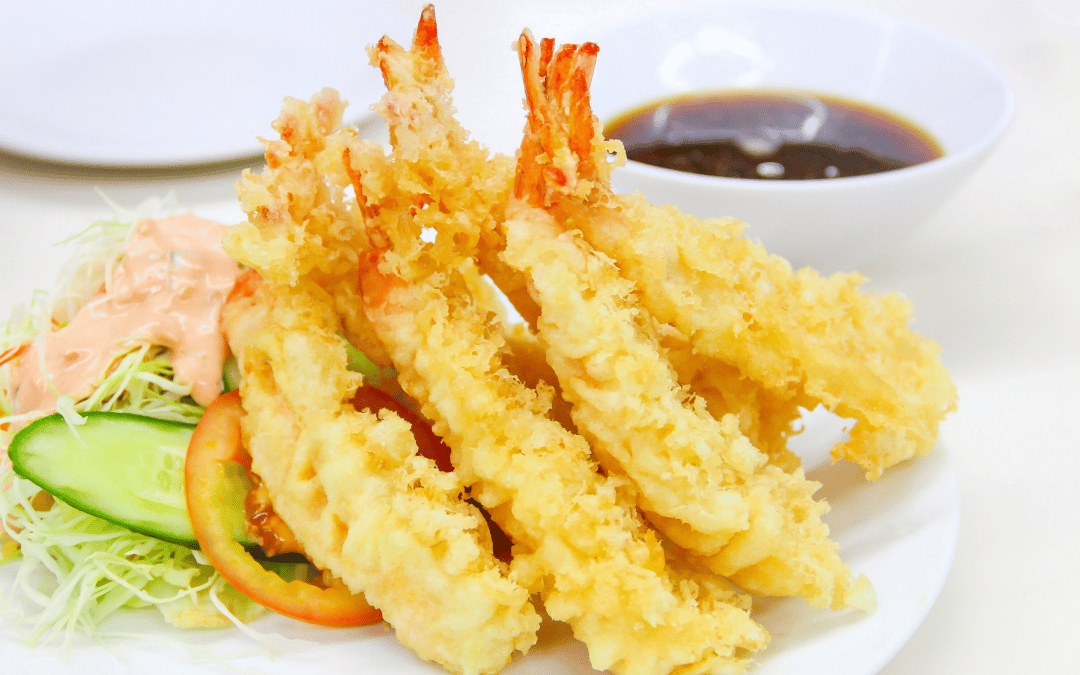
Jean’s Shrimp Tempura

Jean’s Shrimp Tempura

Jean Mishima, Chicago Japanese-American Historical Society 


Taste from Home is a collection of recipes and stories can be used as a way to connect with others and facilitate conversations about race, culture, and identity over a new recipe. Make a cultural dish and sit down with family and friends and have a discussion of the culture it represents.  Please consider making a tax-deductible donation today, if you are able. If you are unable to donate, you can still participate by sharing a recipe by using hashtags #tastefromhome, #tastefromhomerecipe, & #chicagocultural on FacebookTwitter, or Instagram.


Doris – SURVIVOR   

My mother, Kimiye (Doris) was born in Los Angeles, California on August 13, 1916. 

She was taken back to Japan when she was 4 years old to live with her parental grandparents.  She remembered going up the mountain every day to collect fire wood   She returned to the United States when she 11 years old on July 19, 1927.

In her high school years, she was boarded out to a physician’s family to take care of their twin sons in exchange for her room and board until she was 17. A marriage was arranged at the age of 18 to a man she met only a week before the wedding.

On August 2, 1942 during WWII, she and her family were incarcerated and put into an internment camp in Gila River, Arizona for a little over two years, and their only crime was they were of Japanese descent. 

She came to Chicago in October 1944, found an apartment and returned to Gila River to collect the family.

We lived at 55th and Blackstone and eventually moved to the north and later west side of Chicago.

She was a survivor.  She endured many hardships:  denied family cohesiveness growing up, forced into an arranged marriage, endured being imprisoned for being a Japanese American, and raised three children as a single parent.

She died in October 1944 of bone cancer.

In 2018 Jean was honored with our outstanding community leader award. Check out her interview below to hear her story!

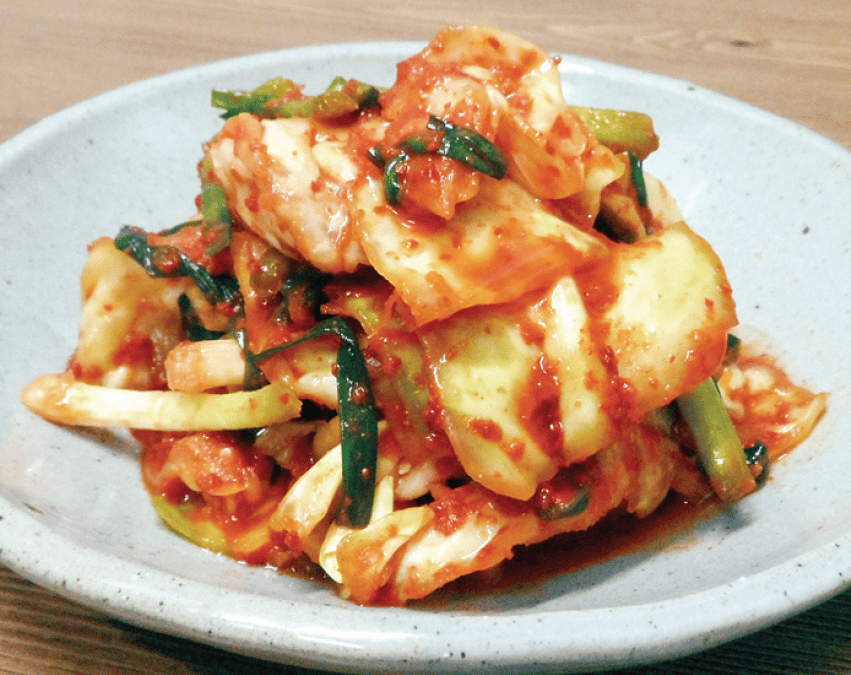
Cabbage Kimchi from the Korean Cultural Center of Chicago

Cabbage Kimchi from the Korean Cultural Center of Chicago

Dr. Yoon Tae Kim, Korean Cultural Center of Chicago


Taste from Home is a collection of recipes and stories can be used as a way to connect with others and facilitate conversations about race, culture, and identity over a new recipe. Make a cultural dish and sit down with family and friends and have a discussion of the culture it represents.  Please consider making a tax-deductible donation today, if you are able. If you are unable to donate, you can still participate by sharing a recipe by using hashtags #tastefromhome, #tastefromhomerecipe, & #chicagocultural on FacebookTwitter, or Instagram.


The mission of the Korean Cultural Center of Chicago (KCCoC) is to promote and organize Korean cultural, arts, educational, and social activities. KCCoC aims to establish a venue where all Korean Americans and other groups can participate in programs and events that celebrate Korean culture and heritage. KCCoC strongly encourages cross-cultural understanding that can embrace and empower all people to coexist peacefully.

“Kimchi has been a staple in the diet of Koreans for thousands of years. It is a great method of preserving vegetables throughout the season when the refrigerator was not available and also a great source of vitamins and other necessary dietary elements. Now it has become a well known and loved recipe internationally, because it has a special character of making someone becoming adhered and addicted once they have experienced its taste.

My wife and I, not being good at cooking, tried to make a Kimchi when we first got married in 1974. At that time, not many ingredients were available. But we had cabbage and hot peppers. Just remembering the scene when my mother and sister had made Kimchi years ago, we salted cabbage and put hot peppers and green onions in the bottle and left it there for a day. We did not know how it would turn out. In fact, we did not expect it to be good at all! But to our big surprise, when we tasted it, it truly was delicious. I still remember that triumphant moment.”
– Dr. Yoon Tae Kim

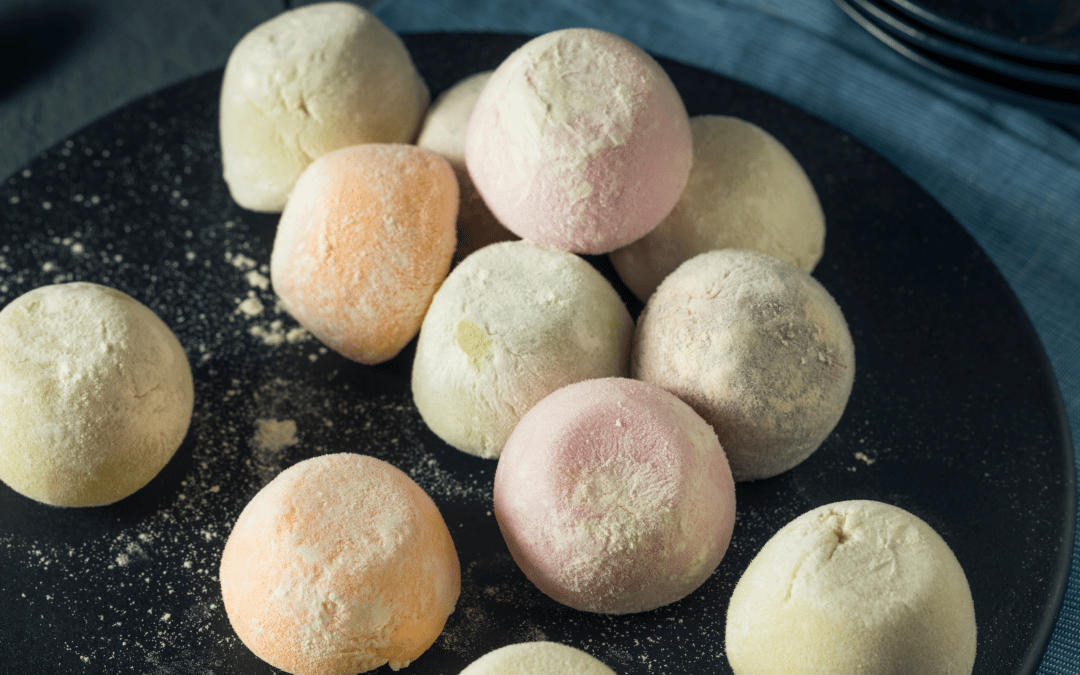
Diane’s Japanese Mochi

Diane’s Japanese Mochi

Diane Ohi, Human Resources Director, Chicago History Museum 


Taste from Home is a collection of recipes and stories can be used as a way to connect with others and facilitate conversations about race, culture, and identity over a new recipe. Make a cultural dish and sit down with family and friends and have a discussion of the culture it represents.  Please consider making a tax-deductible donation today, if you are able. If you are unable to donate, you can still participate by sharing a recipe by using hashtags #tastefromhome, #tastefromhomerecipe, & #chicagocultural on FacebookTwitter, or Instagram.

Beans and rice – a familiar world-wide staple, yes?  But what about beans and rice …for dessert? Here, I’m telling the story of my Japanese-American family’s love of desserts made from sweetened azuki beans and sweet rice.  Many of you may have heard of mochi, the smooth chewy rice dessert filled with ice cream at restaurants.   In its original form, that same mochi is filled with red azuki beans cooked in sugar.  Another variation takes the sweetened beans thinned into a soup and served hot in the winter, with toasted sweet rice “cakes” cooked in a dry skillet until chewy in the inside, and crispy on the outside.  A summer version, frequently served at festivals, is the same “soup” served over shaved ice – cool, sweet, and refreshing.

My kids and I love mochi in all its forms and due to their early childhood food allergies to milk and nuts, mochi became our go-to dessert.  Having avoided ice cream, cup cakes, cookies, and candy bars for years, I was thrilled to make a nut-free, dairy-free dessert with a connection to my cultural heritage – MOCHI! As a child, I recall going to the Japanese grocer with my mother and grandmother and seeing the trays of freshly made fancy mochi at the cash register.  Often in bright colors, the pink, green and white striped suama was my favorite, seconded by the pink mochi with the gelatin green leaf on the side.  They were all so beautiful and the counter was a perfect height to entice a young girl with a serious sweet tooth. In its most basic form, mochi is pounded sweet rice (a variety of rice) pounded until sticky and chewy and formed into flattened disks. They say the mochi is done when it is pounded so smooth that it feels like a baby’s earlobe!  Made especially to celebrate the New Year, this plain mochi is a must eat food to start the year off right.

My family and I attended many New Year’s mochi-tsuki rice pounding celebrations at the Chicago JASC with the members of Tohkon Judo Academy, members of the JA community, and other welcome neighborhood guests.  My children even tried their hand at mochi “smooshing” using large mallets and hot rice in a giant stone bowl.  The actual pounding is somewhat dangerous and done by teams of four adults, who alternated their pounds like a drum quartet, all pounding their long wooden mallets into the same large stone bowl. Later, “the grandmas” (aka the professionals) allowed my children and me to form the mochi into rice cakes and even fill the plain cakes with a whole strawberry and sweetened red bean paste. These finished trays of mochi were then delivered to senior centers, restaurants, and shared with guests.

My mother and grandmother would serve toasted stove top mochi in a bowl with a little sugar and soy sauce for dipping. The mochi was crunchy and chewy, the sauce salty and sweet.  A truly wonderful and satisfying fall or winter snack.  We now make this at home but in a Belgian waffle maker and call it “Mah-fu-roos” (mochi waffles)! Today, my children no longer have their allergies, but still love to indulge in mochi desserts.  They have discovered my well-worn book of Hawaiian mochi recipes and are trying new dishes, like microwave butter mochi cake, mango mochi, and tri-colored baked coconut mochi for Girls Day. Like many traditions in America, we remember the old and add our new touches.  I am truly grateful for the opportunity to pass along  our mochi-love and pride in our cultural heritage.

Rosa’s German Apple Pancakes

Rosa’s German Apple Pancakes

Rosa Gallagher, Museum Director, Dank Haus German American Cultural Center


Taste from Home is a collection of recipes and stories can be used as a way to connect with others and facilitate conversations about race, culture, and identity over a new recipe. Make a cultural dish and sit down with family and friends and have a discussion of the culture it represents. 

Please consider making a tax-deductible donation today, if you are able. If you are unable to donate, you can still participate by sharing a recipe by using hashtags #tastefromhome, #tastefromhomerecipe, & #chicagocultural on FacebookTwitter, or Instagram.


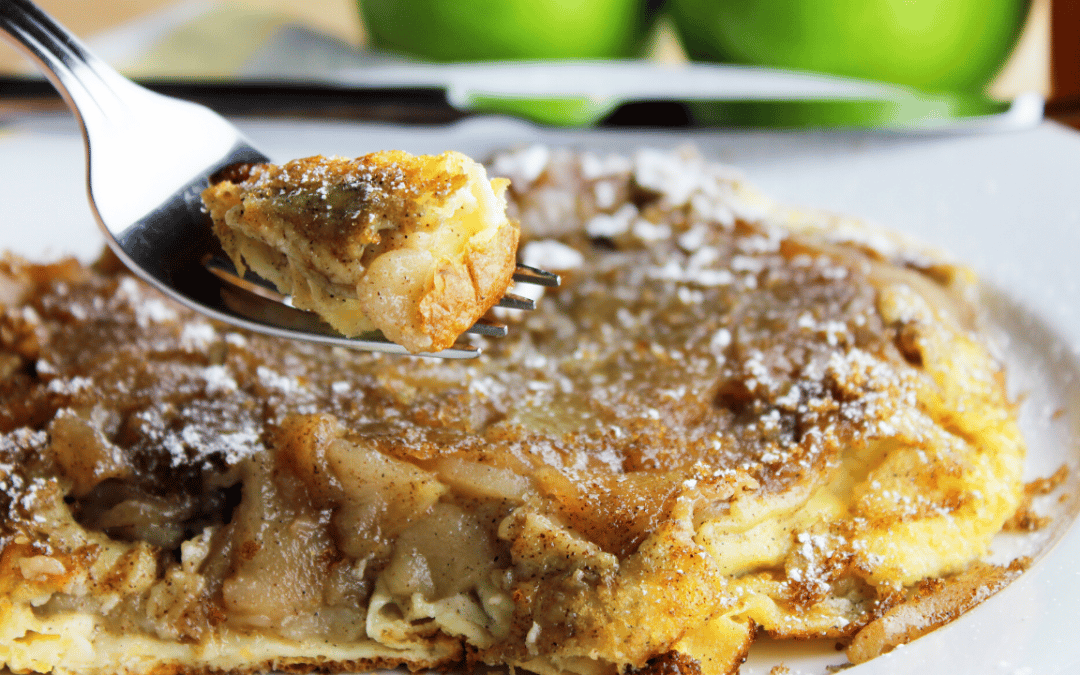
I am the Museum Director at the DANK Haus German American Cultural Center, and absolutely love German food! This recipe for apple pancakes is simple, vegetarian, and uses basic ingredients, so lots of people are sure to enjoy it. 

Who taught you this recipe/how did you learn it?

My mom and Oma (grandma) made this for me when I was growing up. I myself have never been a pancake-maker, but I had a craving for it on a cold weekend this past winter. I searched “Apfelpfannkuchen” on YouTube and watched the one that looked best and was by a German person. I didn’t have “vanilla sugar” and it took me a few minutes to convert from grams to ounces, but it turned out fine. In fact, I started making it every few weeks, with a slight adaptation or twist every time. For the first batch, I used thinly sliced apples. The next time, I grated the apples on a cheese grater and just mixed it into the batter. The two methods are equally delicious!

When do you normally eat this dish? Is it for a holiday or celebration?

You can eat Apfelpfannkuchen any time of year. Pancakes are not just a breakfast food in Germany, in fact, I remember eating them in the afternoon as a sort of sweet lunch. They are more chewy and thin than American pancakes. 

What culture/country is this recipe from?

This recipe is German, though they are similar to French crepes. In my experience, the Germans eat them flat rather than folded or rolled.

Why is it important to you?

This recipe makes me think of fun afternoons having pancakes made by my Oma, then playing board games with my siblings and grandparents. I love German desserts that use fresh delicious fruit and amplify the flavors with lots of butter! 

The recipe is in the link. A donation is not required to view the recipe. Any donations made will support the Chicago Cultural Alliance’s mission to promote, support, and connect museums and centers of cultural heritage for a more inclusive and equitable Chicago. 

Maria’s Ukrainian Shish Kabob

Maria’s Ukrainian Shish Kabob

Maria Klimchak, Executive Curator , Ukrainian National Museum 


Taste from Home is a collection of recipes and stories can be used as a way to connect with others and facilitate conversations about race, culture, and identity over a new recipe. Make a cultural dish and sit down with family and friends and have a discussion of the culture it represents. 

Please consider making a tax-deductible donation today, if you are able. If you are unable to donate, you can still participate by sharing a recipe by using hashtags #tastefromhome, #tastefromhomerecipe, & #chicagocultural on FacebookTwitter, or Instagram.


A celebration of Ukrainian food and inspiration from my aunt.

This story is about my aunt Anna (Hania) Lytwyn who was born in 1924 in Ukraine. In 1942 the Nazis took her to work in forced labor camps in Germany. In 1948 she emigrated from Germany to Canada…My multi-talented aunt and baba Hania was an amazing person. I remember her from my childhood through many letters, which we received from Canada, while we still lived in Ukraine. When we moved to USA, she embraced us all like we were her own children.

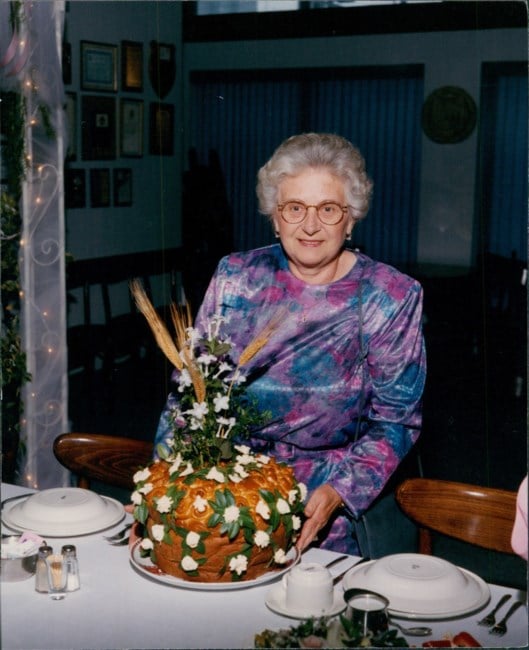
She was a lifelong member of the Ukrainian Womens’ Organization serving 10 years as president, and was a cornerstone member of the Ukrainian National Federation, as well as a founding member of the Seniors Club. She was well known for her catering skills in preparing traditional Ukrainian cuisine and taught specialty bread making (korovai) at Mohawk College even appearing on the W networks television show, Loving Spoonfuls. Embroidering, traditional Easter Eggs (pysanky), and tending to her rose gardens were something this amazing and multi-talented women enjoyed not only to do herself, but also to teach others her craft and skill. A woman of diversity and love of life and family, her ability to never stop learning will continue to inspire us all. She passed in May 2016. I hope you enjoy looking at my Ukrainian kitchen through “baba Hania’s” recipes.

The recipe is in the link. A donation is not required to view the recipe. Any donations made will support the Chicago Cultural Alliance’s mission to promote, support, and connect museums and centers of cultural heritage for a more inclusive and equitable Chicago. 

Randy’s Slovak Paprikash

Randy’s Slovak Paprikash

Randy Adamsick, Board Member, Chicago Cultural Alliance


Taste from Home is a collection of recipes and stories can be used as a way to connect with others and facilitate conversations about race, culture, and identity over a new recipe. Make a cultural dish and sit down with family and friends and have a discussion of the culture it represents. 

Please consider making a tax-deductible donation today, if you are able. If you are unable to donate, you can still participate by sharing a recipe by using hashtags #tastefromhome, #tastefromhomerecipe, & #chicagocultural on FacebookTwitter, or Instagram.


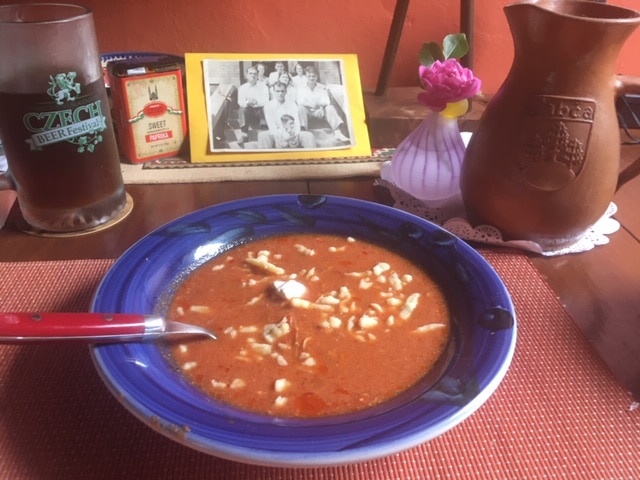
When my grandparents arrived in Pilsen from Rabca, Slovakia around 1900, they brought little with them except their desire for a better life, work ethic, and many Old World traditions. Among our culinary staples like goulash, stuffed cabbage, pork with sauerkraut, was our favorite on a cold Chicago night, Chicken Paprikash.  Ours was the “peasant” soup version of Paprikash, because it went much further (especially when loaded with dumplings) for Andrej and Maria’s family of seven.  This included my dad who was orphaned with his siblings by the time he was 16.  Our block of 24th St. was filled with sounds and smells and crazy characters who all seemed to have nicknames: “Pappy, K-Boy, Uncle Fat, Kiki, Copsy, and my dad, “Blackie.”  We never ate Paprikash without a big crowd around the table, drinking beer, telling stories, and complaining about the White Sox. 

In the 1970s, when my family moved out of the neighborhood, I missed what I didn’t know I had: an identity that went back generations to Slovakia, the homeland that I finally visited in 1997, nearly 100 years after the Adamcik arrival at Ellis Island. 

Chicago neighborhoods are full of such stories, and preserving these stories is the mission of a unique, only-in-Chicago non-profit, the Chicago Cultural Alliance.

Please support the Alliance with a gift to our Taste From Home Campaign. 

The recipe is in the link. A donation is not required to view the recipe. Any donations made will support the Chicago Cultural Alliance’s mission to promote, support, and connect museums and centers of cultural heritage for a more inclusive and equitable Chicago. 

Chinese American Museum of Chicago’s Steamed Pork Patty

Chinese American Museum of Chicago’s Steamed Pork Patty

Chinese American Museum of Chicago


Taste from Home is a collection of recipes and stories can be used as a way to connect with others and facilitate conversations about race, culture, and identity over a new recipe. Make a cultural dish and sit down with family and friends and have a discussion of the culture it represents. 

Please consider making a tax-deductible donation today, if you are able. If you are unable to donate, you can still participate by sharing a recipe by using hashtags #tastefromhome, #tastefromhomerecipe, & #chicagocultural on FacebookTwitter, or Instagram.

Please consider making a tax-deductible donation today, if you are able. If you are unable to donate, you can still participate by sharing a recipe by using hashtags #tastefromhome, #tastefromhomerecipe, & #chicagocultural on FacebookTwitter, or Instagram.


“In the late 1930’s, because of the war in China, I attended school near my home until just before my 8th birthday. My family lived in the town of Samkong (Kwangtung Province) in the hospital run by my mother Dr. Hoi-poh Yue. When I started 3rd grade, I went to boarding school 8 miles away in Linhsien, a 3-hour walk, rather difficult for a child. I walked to school each Sunday afternoon, and returned home each Saturday afternoon, so I had only one day at home with my family each week. My father, R. Paul Montgomery, had a room in the mission school. I was homesick and wanted to go home with him during the week, but that was not possible due to the distance between home and school. One Monday afternoon, I asked to go home with Father on his bicycle. I ran after him, the dorm matron trying to stop me. The matron’s bound feet prevented her from running fast enough to catch up with me. Father took me home that one time, as his heart was breaking. My mother was working with the Red Cross, helping the war-ravaged citizens. She sat me down and firmly lectured me about the importance of an education, telling me that I must stay in school and study hard. However, Mother promised to come fetch me on Saturday to take me out for dim sum, a rare treat at that time. My grandmother was worried about the food I was given in boarding school, so she would make the meat patty for me whenever a relative or villager was going from Samkong to Linhsien. There was no refrigeration in those days, as it had to be timed just right for my meals.”

Story & Recipe contributed by Margaret Larson for the Cook Book “Have You Eaten Yet?” published by the Chinese American Museum of Chicago.

The recipe is in the link. A donation is not required to view the recipe. Any donations made will support the Chicago Cultural Alliance’s mission to promote, support, and connect museums and centers of cultural heritage for a more inclusive and equitable Chicago. 

Elisabeth’s Romanian Cozonac

Elisabeth’s Romanian Cozonac

Elizabeth Carr, Development & Membership Intern, Chicago Cultural Alliance


Taste from Home is a collection of recipes and stories can be used as a way to connect with others and facilitate conversations about race, culture, and identity over a new recipe. Make a cultural dish and sit down with family and friends and have a discussion of the culture it represents. 

Please consider making a tax-deductible donation today, if you are able. If you are unable to donate, you can still participate by sharing a recipe by using hashtags #tastefromhome, #tastefromhomerecipe, & #chicagocultural on FacebookTwitter, or Instagram.


1. Who taught you this recipe/how did you learn it? 

I learned this recipe (Cozonac) from my very lovely roommate, Raluca, who I’ve been living and cooking and baking with for almost a whole year now, who learned this recipe from her mother and grandmother (though we actually had to look up the recipe specifics because for Raluca’s family, you just know how to make it!) 

2. When do you normally eat this dish? Is it for a holiday or celebration? 

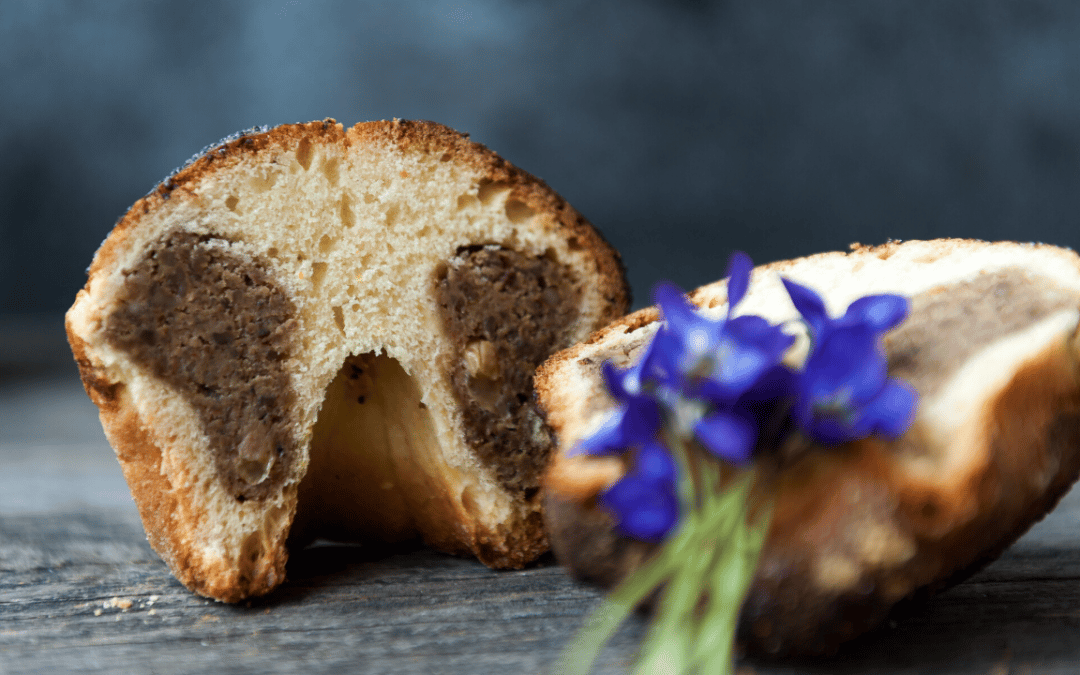
Cozonac is a traditional holiday sweet bread usually served on Christmas and Easter. 

3. What culture/country is this recipe from? 

This recipe is from Romania! 

4. Why is it important to you? 

When I asked my roommate for a recipe that her family makes that is important to her and reminds her of home, she chose Cozonac. Though Cozonac is not a tradition for my very non-Romanian family, my mother (like many mothers, as I have now learned) makes bread for Christmas and Easter and that always reminds me of home.  

Our first attempt at Cozonac was a delicious success and as a wonderful bonus, her family thought we did a great job! 

My roommate and I grew up in different countries and different cultures, but we wanted to attempt a recipe that tied together both of our family’s traditions and cultures to share with the Chicago Cultural Alliance’s Taste from Home initiative. 

The recipe is in the link. A donation is not required to view the recipe. Any donations made will support the Chicago Cultural Alliance’s mission to promote, support, and connect museums and centers of cultural heritage for a more inclusive and equitable Chicago. 

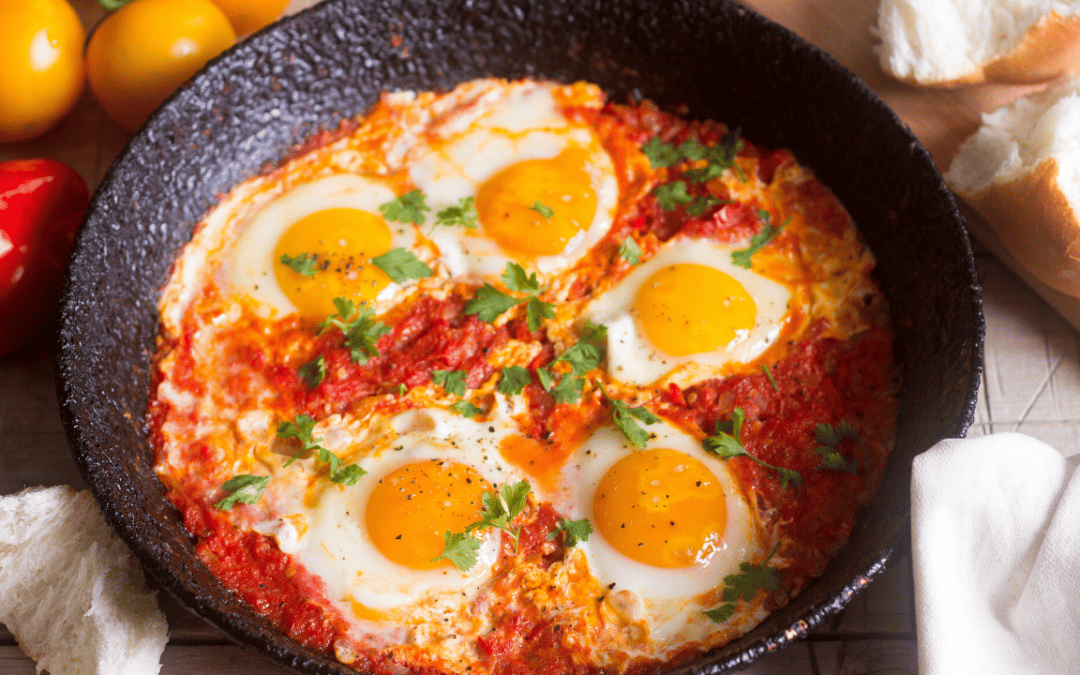
Tracey’s Israeli Shakshuka

Tracey’s Israeli Shakshuka

Tracey Suppo, Board Member, Chicago Cultural Alliance & CEO/Co-Founder Of Book+Main 


Taste from Home is a collection of recipes and stories can be used as a way to connect with others and facilitate conversations about race, culture, and identity over a new recipe. Make a cultural dish and sit down with family and friends and have a discussion of the culture it represents. 

Please consider making a tax-deductible donation today, if you are able. If you are unable to donate, you can still participate by sharing a recipe by using hashtags #tastefromhome, #tastefromhomerecipe, & #chicagocultural on FacebookTwitter, or Instagram.


From the time I can remember, I’ve always loved to cook. My grandmother, Clara, was an amazing cook and I grew up eating her food almost every Friday night when my family would go to my grandparents’ house for Shabbat dinner. Me, my parents, and my three siblings, plus my aunts, uncles, and cousins would all come together to celebrate the sabbath, eat, and catch up. My family moved away from Chicago when I was 12, but those gatherings are some of the most wonderful memories from my childhood.

My grandparents were Holocaust survivors. They met after the war and my mother was born in the Czech Republic. They came to the States when she was only six months old. Both of my grandparents had lost almost their entire families in the camps, and I can only imagine the joy they must have felt on those nights to be surrounded by a large, growing family that they created. Notably, my grandparents’ naturalization papers and many photos from my family’s archive are on display at the Illinois Holocaust Museum.

There are so many recipes that bring back childhood memories of my grandmother’s cooking: chicken paprikash, cholent, stuffed cabbage…and on and on.

However, in 2000, I went to Israel for the first time to attend my cousin’s wedding. I immediately fell in love with the country and its people—and, of course, its food. One of the dishes that has stayed with me since is shakshuka. I love vegetables and dishes that scream FRESH and have lively, bright flavors. I also like dishes that are really healthy. This is one of those dishes. There are many variations on shakshuka, and different ethnicities and countries often have their own spin. This is the way I learned to make it and it is a dish that I make often.

    The recipe is in the link. A donation is not required to view the recipe. Any donations made will support the Chicago Cultural Alliance’s mission to promote, support, and connect museums and centers of cultural heritage for a more inclusive and equitable Chicago. 

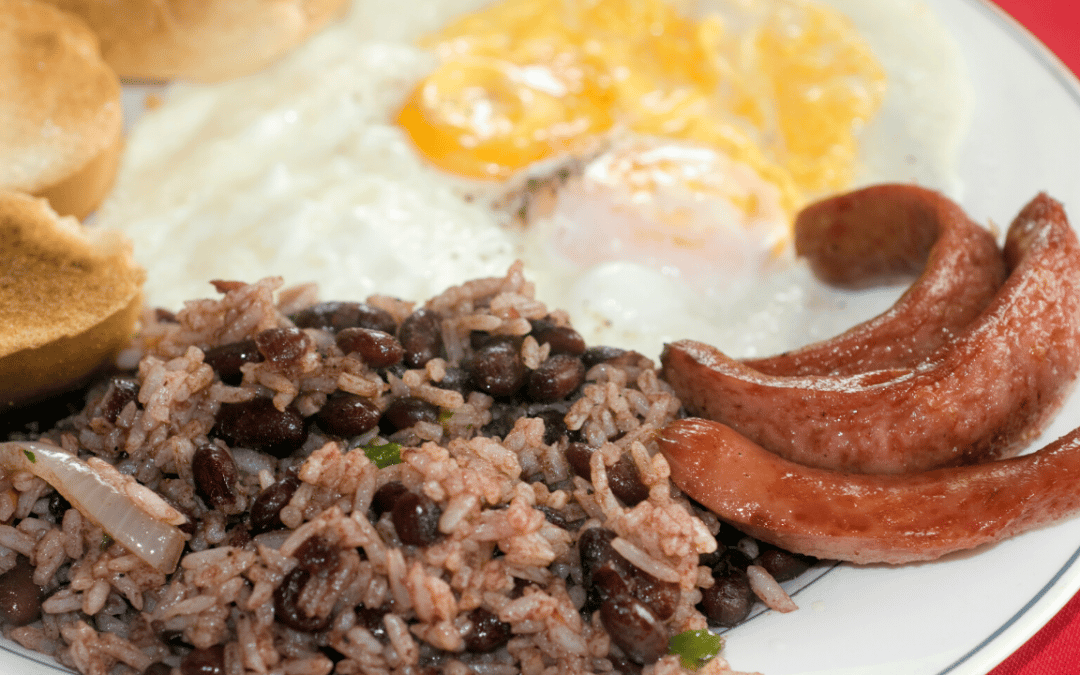
    Teresita’s Nicaraguan Gallo Pinto

    Teresita’s Nicaraguan Gallo Pinto

    Teresita Aviles Bailey, Development and Membership Associate, Chicago Cultural Alliance


    Taste from Home is a collection of recipes and stories inspired by the food that defines who we are and where we come from. As we are all home exploring new recipes and cuisines, we encourage you to share a recipe and story with us that connects you to your family and cultural heritage.

    Please consider making a tax-deductible donation today, if you are able. If you are unable to donate, you can still participate by sharing a recipe by using hashtags #tastefromhome, #tastefromhomerecipe, & #chicagocultural on FacebookTwitter, or Instagram.


    Who taught you this recipe/how did you learn it?

    I would love to say my mom taught me, since she is one of the best cooks in the family. However, she doesn’t measure things so as a teenager I never bothered to watch her and learn. So instead it is with great fun that I say that it was my American boyfriend (who is now my husband) taught me how to cook this traditional Nicaraguan dish. During my undergrad at Purdue I couldn’t afford to go home to Nicaragua and I was feeling quite homesick for one of my birthdays. He surprised me by cooking gallo pinto, although he was apologizing because he had burnt some of it. Little did he know that that was how my grandma (my Meme) would cook it. She would leave it on stove top on low while she did other things stirring it occasionally until it was nice and crispy. Now in our home, we serve it two different versions, a soft version for my husband and a crispy version for me.

    When do you normally eat this dish? Is it for a holiday or celebration?

    Gallo Pinto is a staple meal and you will find it in every Nicaraguan household at any time of the day alone or as a side. It is not uncommon to eat it for breakfast with eggs, cheese, and CORN tortillas, for lunch with cabbage salad and some type meat, and then again for dinner with a churrasco and plantains or more tortillas. Pre-pandemic, I would cook it maybe once a month or every couple of months because it takes while to get it just right. Since the quarantine however, I’ve developed the habit of making a big pot of beans and keep some in the freezer to make a big batch of gallo pinto to eat throughout the week. My husband loves it and will eat everyday given the chance.

    What culture/country is this recipe from?

    Nicaragua, however, it is a very common dish throughout Latin America with a few variations of beans (black beans vs. red) or different kinds of oil depending on the region and personal touches from each family (My family- A LOT of garlic). On the Atlantic Coast of Nicaragua and Costa Rica for example, it is cooked with coconut oil which gives it a different flavor. In El Salvador it is called “casamiento” or “casados”. We all like to claim the dish as our own-which can lead to very heated debates- so before I get angry messages from family and friends: “El Gallo Pinto es Nica!”.

    Why is it important to you?

    It is quite simply a Taste From Home. It is a dish that reminds me of my family, friends, and my life in Nicaragua. It bring me joy and it is very comforting. My family is spread out around the world due to the Civil War during the 80’s but I am certain that they all cook this dish to remind them of home.

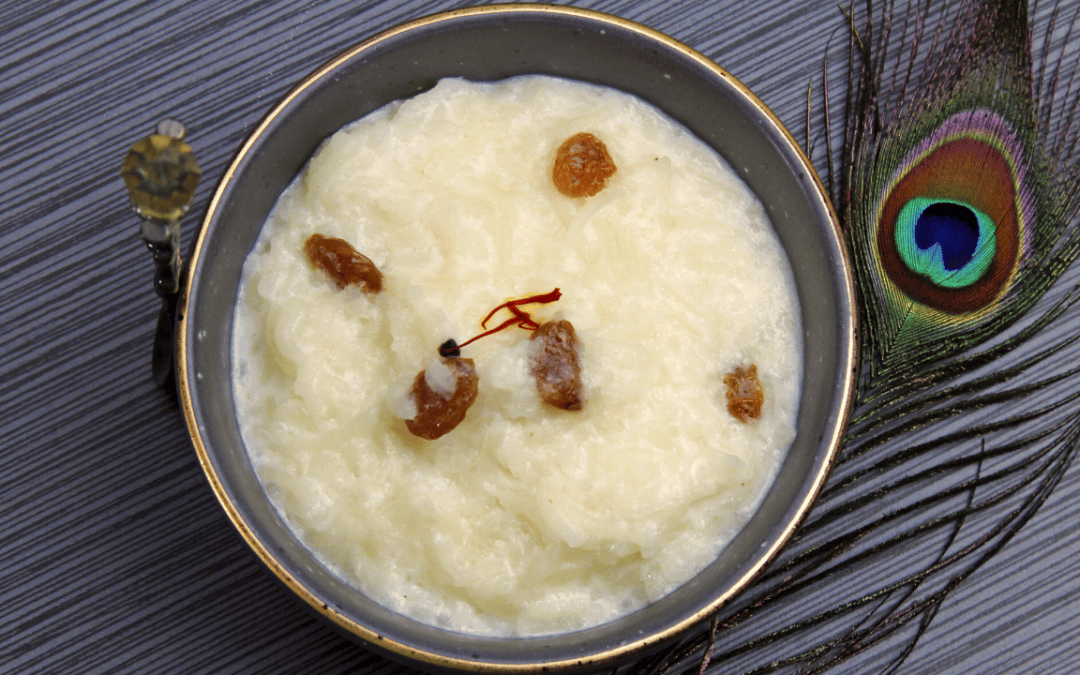
    Indian Kheer Recipe & Story

    Indian Kheer Recipe & Story

    Shailaja Kumar, Friend of Vandita Garg, Board Secretary, Chicago Cultural Alliance

    Taste from Home is collection of recipes and stories inspired by the food that defines who we are and where we come from. As we are all home exploring new recipes and cuisines, we encourage you to share a recipe and story with us that connects you to your family and cultural heritage.

    Please consider making a tax-deductible donation today, if you are able. If you are unable to donate, you can still participate by sharing a recipe by using hashtags #tastefromhomechi, #thisischicago, & #chicagocultural on Facebook, Twitter, or Instagram.


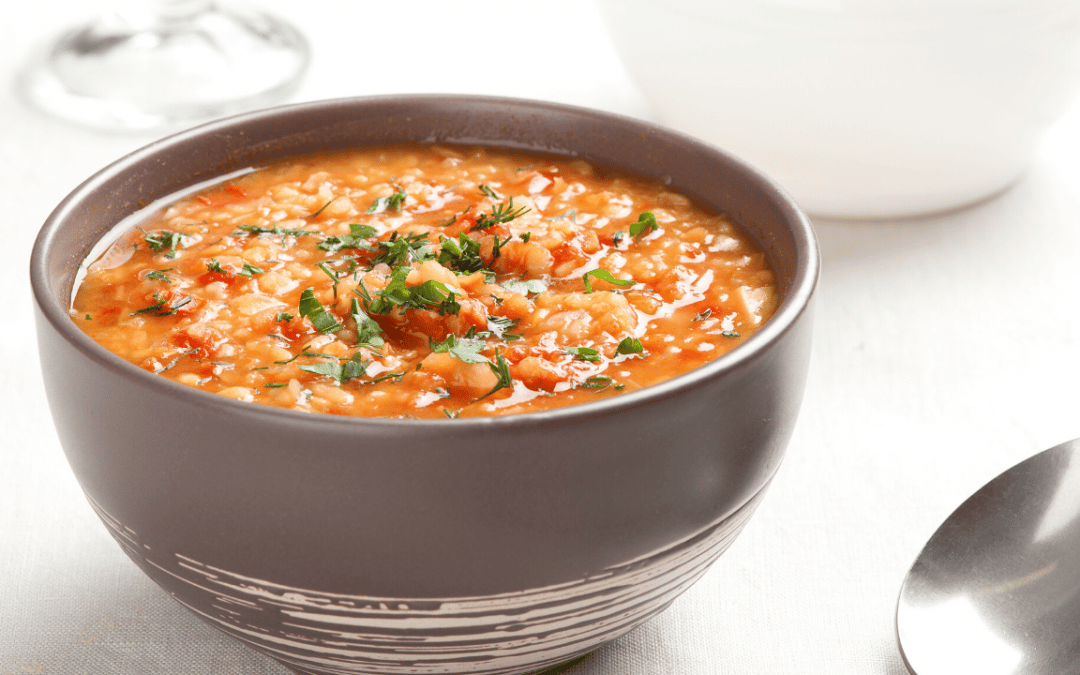
    Suzanne’s Turkish Lentil Soup

    Suzanne’s Turkish Lentil Soup

    Suzanne Franklin, Board Member, Chicago Cultural Alliance


    Taste from Home is a collection of recipes and stories can be used as a way to connect with others and facilitate conversations about race, culture, and identity over a new recipe.

    Please consider making a tax-deductible donation today, if you are able. If you are unable to donate, you can still participate by sharing a recipe by using hashtags #tastefromhome, #tastefromhomerecipe, & #chicagocultural on FacebookTwitter, or Instagram.


    We are the stories we tell!

    Years ago, my husband and I were Peace Corps volunteers in the remote village of Beysehir Turkey.  We were young and very idealistic and were assigned to teach English in schools.  Speaking very little Turkish, we felt overwhelmed and challenged navigating each day.

    After several lonely months, one family opened their home and hearts to us.  It was a passport into each other’s worlds.  As we practiced our Turkish and became familiar with Turkish culture, they shared with us their lives and their dreams.  We cherished our weekends together sharing meals and friendship.  Their willingness to accept us was such a generous act and a lesson that has endured with us throughout our lives.

    I first learned of Turkish lentil soup one memorable fall day. A neighbor of our family hosted us to dinner.  I remember sitting with the mother and daughter of the house as we talked and laughed together.  They embraced me as a daughter and a sister.  They taught me not only how to make this delicious soup but, so much more in life. When I close my eyes, I can see us practicing Turkish and talking about our lives as we sipped Turkish tea, chopped onions, picked fresh tomatoes from their garden, and served this yummy soup with freshly baked bread for dinner.  It was a wonderful afternoon that has lingered until now.

    Whenever I make this soup, which has become a family legend, I think of that afternoon and smile and, share this story with all my guests and the many life lessons it has taught me.

    Opening windows to other cultures is why I am so proud to be a board member of the Chicago Cultural Alliance.   In these challenging times, we especially need to open our hearts and our wallets to help in the work of Alliance whose mission is to promote, connect, and support a more diverse and inclusive Chicago.   At this critical juncture, please stand with me in making a difference by making a donation today.

    The recipe is in the link. A donation is not required to view the recipe. Any donations made will support the Chicago Cultural Alliance’s mission to promote, support, and connect museums and centers of cultural heritage for a more inclusive and equitable Chicago. 

    Peter’s New York City Bagel and Lox

    Peter’s New York City Bagel and Lox

    Peter Vega, Executive Director, Chicago Cultural Alliance

    Taste from Home is a collection of recipes and stories can be used as a way to connect with others and facilitate conversations about race, culture, and identity over a new recipe. Make a cultural dish and sit down with family and friends and have a discussion of the culture it represents. 

    Please consider making a tax-deductible donation today, if you are able. If you are unable to donate, you can still participate by sharing a recipe by using hashtags #tastefromhome, #tastefromhomerecipe, & #chicagocultural on FacebookTwitter, or Instagram.


    During our time in quarantine, my partner Stephen and his sister, Carolyn, and I decided to start cultural culinary adventures on the weekends! We alternated weekends on who would decide the menu and cultural cuisine. On my weekend, I wanted to make something that reminded me of home. One option I thought of was the delicious Puerto Rican family recipes that I have yet to perfect myself, however, I made it a personal goal to make Puerto Rican food more often in general. So, I thought about other dishes that remind me of home and New York City pizza and bagels immediately came to mind. 

    As of May, I’ve lived in Chicago for seven years, but New York City is home and more specifically the Bronx. I grew up on East 220th Street and Carpenter Avenue in the Northeast Bronx where in the 60s, this neighborhood was predominantly Jewish and Italian-American. As a kid in the 90s, living in the Bronx, children my age would hang out with their friends to eat cheap pizza. So I would indulge in the delicious cuisine of the New York pizza joints and Jewish delis that were such foundations of the community. 

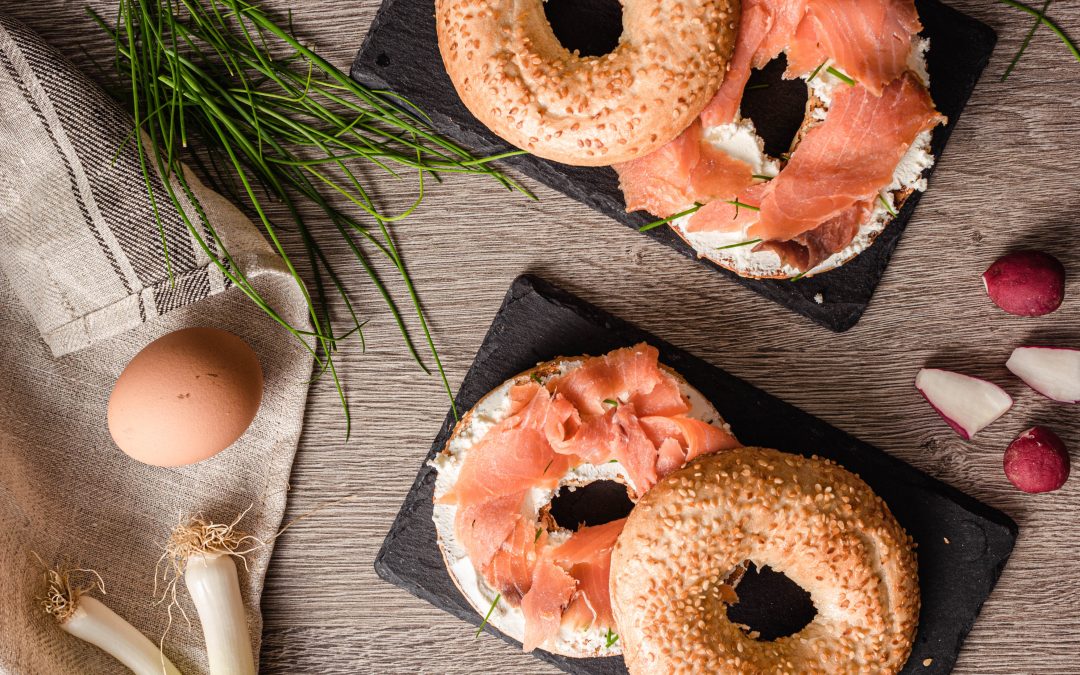
    For my first Taste from Home recipe, I decided to share a Jewish deli classic, bagels and lox. At a young age, I learned the word lox is derived from the Yiddish word for salmon. I made my family a weekend brunch of homemade bagels and all the fixings, including capers, pickled red onions, tomatoes, and cream cheese. When I eat a bagel and lox, I am immediately brought back to my life in New York City. 

    Taste from Home is a storytelling initiative that promotes cultural understanding. Food elicits vivid memories especially when tied to cultural traditions, holidays, or simply experiences that remind us of family and home. We hope you can join us in sharing a Taste from Home story of your own. 

    The Chicago Cultural Alliance promotes and supports museums and cultural heritage centers that help us deepen our knowledge of the cultures in Chicago. I hope you can help us to promote cross-cultural experiences for a more inclusive Chicago by making a donation to the Alliance today. 

    The recipe is in the link. A donation is not required to view the recipe. Any donations made will support the Chicago Cultural Alliance’s mission to promote, support, and connect museums and centers of cultural heritage for a more inclusive and equitable Chicago.